

Yes, 100% cotton shrinks on its first wash, typically 3% to 5% for woven cotton and 5% to 8% for knit jersey, such as tees and sweatshirts. A tee gaining back its true size after a hot wash is the rule rather than the exception.
You pull your favorite T-shirt from the dryer, shake it out, and notice something is off. The hem sits higher, the sleeves feel shorter, and the roomy shape that made it perfect now looks more fitted. With a heavyweight vintage or snow-washed tee, that one hot cycle can also disturb the carefully built-in character of the garment.
The surprise comes from treating “100% cotton” as a complete fit prediction. It isn't. Construction, finishing, water temperature, agitation, and drying method all influence what happens. Once you understand those variables, cotton shrinkage stops feeling random. You can predict which garments need extra care and which ones have already been stabilized.
Table of Contents
- The Moment Your Favorite Tee Comes Out Smaller
- Why Cotton Shrinks When Water and Heat Meet Fiber
- How Much 100% Cotton Shrinks in the Wash
- Why Knit Tees and Sweatpants Behave Differently From Woven Cotton
- The Wash Day Settings That Control Cotton Shrinkage
- Why Cool Wash and Air Dry Are the Real Cotton Care Defaults
- A Simple Care Routine for Cotton Tees and Sweatpants
- Keeping Cotton Honest Without Fussing Over Every Cycle
The Moment Your Favorite Tee Comes Out Smaller
The usual culprit is the dryer, but the process starts earlier. A cotton tee leaves manufacturing with yarns and knitted loops held in a certain amount of tension. Water lets those fibers relax, while heat and tumbling encourage the fabric structure to settle into a tighter shape.
That's why a once-perfect tee can come out looking almost unchanged across the chest but noticeably shorter through the body. Length often changes the way you notice first, especially on casual garments with a relaxed or oversized silhouette. A small loss can turn a balanced drop-shoulder shape into something that feels unexpectedly ordinary.
Practical rule: Treat the first wash as part of the garment's final sizing process, not as a neutral cleaning step.
The useful question isn't only, “Does 100 cotton shrink in the wash?” The better question is, how much room does this particular garment have left to lose? An untreated woven cotton shirt behaves differently from a jersey tee, and a pre-shrunk vintage wash behaves differently from untreated fabric.
Why the first wash feels so dramatic
Independent laundering guidance places common shrinkage for untreated cotton woven fabrics at 3% to 5%, while untreated cotton jersey garments often shrink 5% to 8%. Preshrunk or sanforized cotton is usually much more stable, often around 1% to 3% under ordinary care conditions, as described in this guide to preventing shrinkage in 100% cotton.
Those ranges make the problem tangible. A 30-inch cotton shirt that shrinks 5% loses 1.5 inches in length, enough to alter the fit in casual apparel. The change may be permanent because drying sets the relaxed structure into its new dimensions.
The rest of cotton care is therefore about controlling the first few decisions. Cool water, gentler movement, and low or no dryer heat won't make cotton completely dimensionless, but they reduce the forces that create the biggest fit change.
Why Cotton Shrinks When Water and Heat Meet Fiber
Think of cotton yarn as a spring that has been stretched into place. During knitting or weaving, the yarn and fabric structure can carry tension. Washing releases part of that tension, and heat-driven drying helps consolidate the material into a shorter, tighter configuration.
At the fiber level, cotton is made from cellulose. Water and heat affect the internal bonding that helps hold the fibers and yarns in their manufactured arrangement. Once those bonds loosen, the fibers can move toward a more relaxed state.
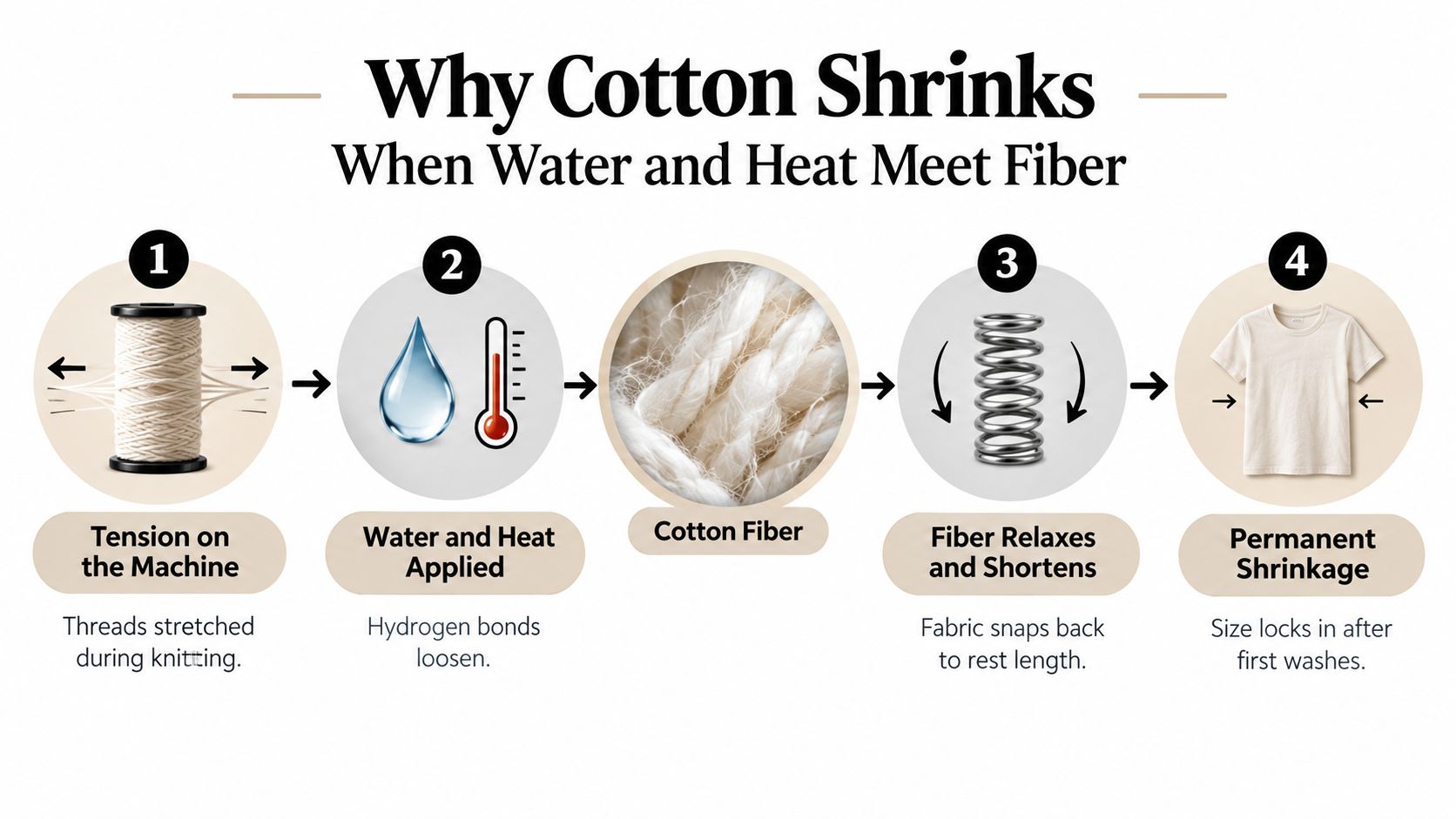
The two kinds of movement
Some change can happen from relaxation shrinkage. Water alone may allow yarn tension to release, so even a cool wash can produce a small dimensional shift in untreated cotton. The effect is usually less severe than a hot wash followed by high-heat drying, but cool water isn't a guarantee that every garment will keep its exact original measurements.
Progressive shrinkage develops when heat, moisture, agitation, and drying repeatedly work on the fabric. Tumbling adds movement and friction, and high heat drives the structure toward a more compact shape. The Cotton Incorporated shrinkage guide identifies the first one to three wash cycles as the period when most shrinkage usually occurs, after which the garment tends to plateau under the same care conditions.
That plateau matters. A tee that has already settled through careful washing isn't likely to keep shrinking dramatically forever under identical conditions. However, changing from air drying to high-heat tumble drying can introduce a new and harsher set of forces.
What the first cycles tell you
The first wash reveals the garment's construction and finish. If a tee changes noticeably after one cool, gentle cycle, it likely had more tension or untreated structure to release. If it barely changes, it may have been compacted, pre-shrunk, or otherwise stabilized before reaching your wardrobe.
You don't need to measure every garment scientifically. Notice the hem, sleeve opening, collar, waistband, and overall length after the first wash. Those areas show whether the fabric has settled evenly or whether the garment needs reshaping while damp.
How Much 100% Cotton Shrinks in the Wash
Shrinkage ranges are useful only when you apply them to the right construction. Woven cotton uses yarns crossing over and under one another in a relatively stable grid. Jersey and other knits use loops, so they can relax in both length and width. That difference helps explain why a heavyweight vintage tee or snow-washed shirt can lose part of its carefully built-in character after one hot wash.
The table gives practical ranges for untreated cotton, not a guarantee for every label. Finish, fabric construction, and laundering conditions can shift the result.
| Fabric Type | Length Shrinkage | Width Shrinkage | Typical Garment |
|---|---|---|---|
| Untreated woven cotton | 3% to 5% | Varies by construction | Shirts, woven overshirts |
| Untreated cotton jersey | 5% to 8% | Varies by construction | T-shirts, sweatshirts |
| Preshrunk or sanforized cotton | About 1% to 3% | Usually limited | Stabilized tees and basics |
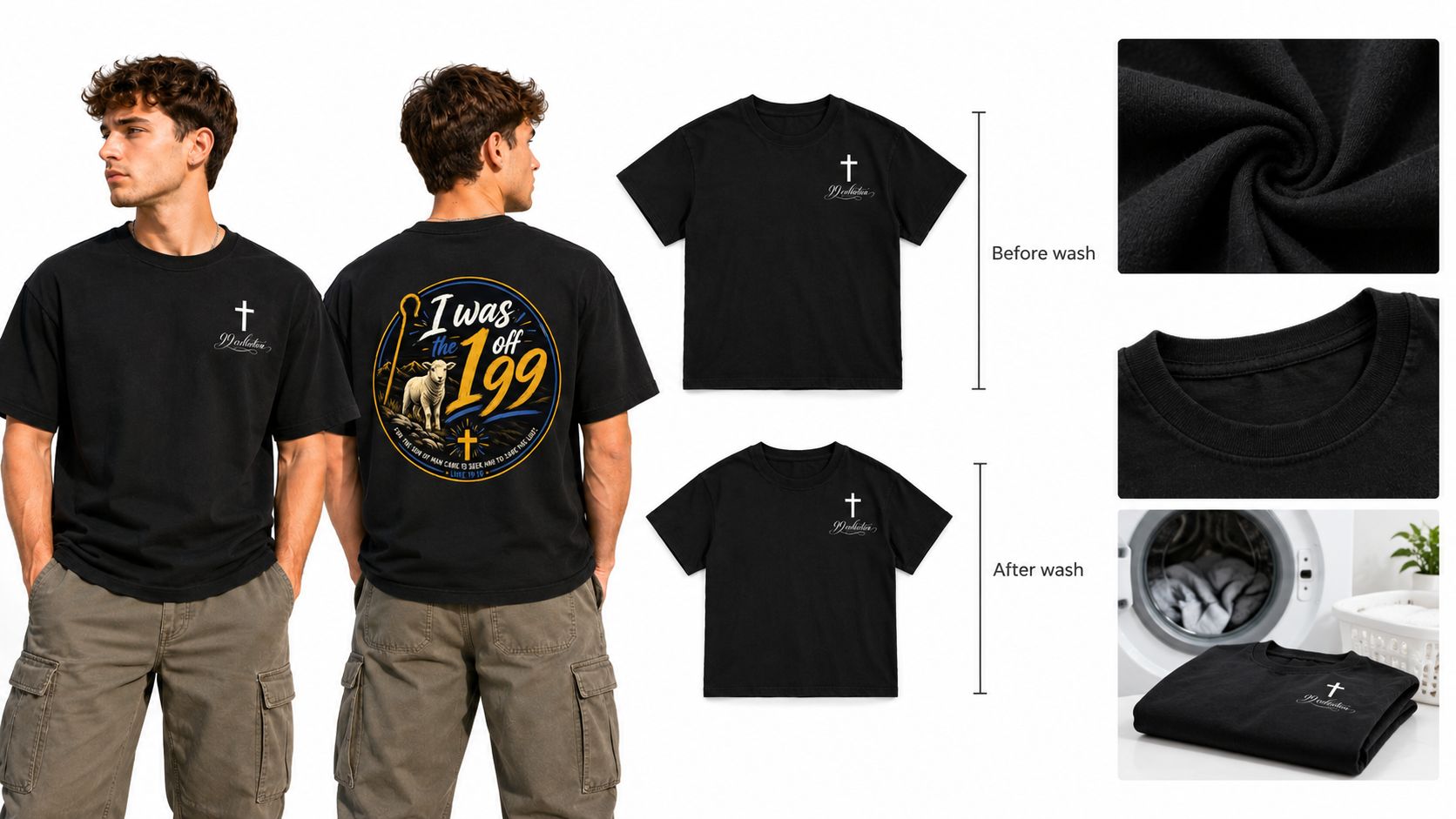
Turning percentages into wardrobe measurements
Suppose a cotton garment measures 30 inches from neckline to hem. A 5% reduction removes 1.5 inches, enough to change whether the shirt covers the waistband or sits above it. The same calculation applies to an inseam. A 28-inch inseam losing 6% would lose 1.68 inches, so the cuff may sit noticeably higher on the ankle.
Starting condition matters. Whirlpool explains cotton shrinkage and distinguishes more stable preshrunk cotton from untreated fabric, which can reach roughly 20% in severe cases under particularly aggressive heat and drying. Treat that figure as an extreme possibility, not a normal result for a finished tee.
A product such as the Unisex Pure Cotton T-Shirt is listed as 100% cotton, 230 g/m², and non-stretch. Its care instructions call for a 30°C gentle machine wash and low tumble drying. Listed body lengths run from 27.56 inches to 30.71 inches across sizes, so even a modest change can affect a close fit.
Why labels aren't enough
“100% cotton” identifies the fiber, not the finishing process or fabric structure. Check knit density, garment measurements, and whether the item is preshrunk before choosing a fitted size. For heavier basics, this guide to thick cotton T-shirts for men shows why fabric weight and construction matter alongside the fiber label. A single hot wash can shorten a vintage or snow-washed tee enough to change its proportions, even when its surface character remains familiar.
Why Knit Tees and Sweatpants Behave Differently From Woven Cotton
A woven cotton shirt is built from yarns arranged in a crossing structure. A knit tee or sweatpant is built from interlocking loops. Those loops give knit garments their comfort and flexibility, but they also leave more structure that can relax when water, heat, and movement enter the picture.
That's why jersey tees and fleece-backed sweatpants often show more noticeable changes than woven cotton trousers. The loops can contract and settle, especially when the garment was finished under tension. A knit may become shorter, narrower, or denser, while a woven garment may show a more controlled change concentrated along one direction.
Construction changes the risk
| Fabric Type | Typical Shrinkage Range | Pre-Wash Treatment | Care Sensitivity |
|---|---|---|---|
| Knit jersey | 5% to 8% untreated | May be compacted or pre-shrunk | Higher sensitivity to heat and tumbling |
| Woven cotton | 3% to 5% untreated | May be sanforized or stabilized | More controlled, but still heat-sensitive |
| Vintage or snow-washed knit | Depends on original fabric and finish | Washed or treated for a lived-in surface | Protect from aggressive repeat drying |
The ranges in the table are general untreated-cotton guidance. A finished vintage or snow-washed piece may already have undergone substantial wet processing, which can remove some of the tension that would otherwise release in a buyer's first wash. That doesn't make it immune. A hot dryer can still tighten the remaining structure and change the drape.
Heavyweight doesn't mean shrink-proof
A heavyweight tee can feel dense and firm, but thickness alone doesn't tell you whether it will retain its dimensions. Yarn tension, loop length, finishing, and garment construction matter more than the simple impression of weight.
Snow washing and vintage washing also create visual character through surface variation, fading, softness, or irregularity. High heat can affect that character as well as the fit. A tee that was designed to look lived-in may lose the relaxed balance between body length, sleeve shape, and surface texture if you repeatedly dry it hot.
For French terry sweatpants, the looped interior deserves the same caution. The French terry fabric guide helps explain why loop construction affects feel and behavior. Keep the garment's structure in mind when selecting the wash cycle, especially if the waistband and cuffs already fit closely.
The Wash Day Settings That Control Cotton Shrinkage
Four controls decide most of the outcome: water temperature, agitation, dryer heat, and drying method. You don't need a complicated laundry system. You need to recognize which setting adds heat or mechanical stress and adjust it before the cycle begins.
Water temperature
Hot water makes cotton fibers swell and helps loosen the tension held in the yarn and fabric. Cold or warm water applies less thermal force, so it's the safer everyday choice for garments whose fit matters.
A warm setting isn't automatically destructive, but it gives the garment more opportunity to relax than a cool cycle. Use the care label as the baseline, then choose the coolest setting that still meets your cleaning needs.
Agitation and cycle length
A normal or heavy cycle moves garments more forcefully than a gentle cycle. Longer movement increases friction and repeatedly flexes the fabric, which can encourage knit loops to settle unevenly.
Turn tees inside out and avoid overloading the drum. Crowding can prevent garments from moving freely, while excessive movement can distort collars, hems, and ribbed edges.
Dryer heat
Dryer heat is where many fit changes become permanent. Moist cotton has already relaxed in the wash, and hot tumbling pushes the structure toward a tighter final shape.
Low heat is safer than high heat, but air drying gives you the most control. Remove garments promptly, reshape them while damp, and don't leave a tee tumbling after it has dried.
Watch the settings in action with this cotton laundry care video.
Drying method
Flat drying supports a knit's original dimensions because the garment rests instead of being repeatedly thrown against a heated drum. A shaped drying rack works well for tees and sweatpants, provided you smooth the seams and don't hang a heavy, wet knit from a narrow shoulder point.
Why Cool Wash and Air Dry Are the Real Cotton Care Defaults
Cool washing and air drying make sense as everyday defaults because they reduce the two strongest sources of avoidable change, heat and aggressive mechanical treatment. They also give you a chance to see how a garment behaves before you commit it to a hot dryer.
The convenience trade-off is small but real. A dryer finishes laundry quickly, while a drying rack asks you to plan around drying time. For a favorite tee, that extra planning can be easier than trying to recover a shortened hem or a tighter sleeve after the garment has settled.
A wardrobe-level decision
Many people wash several garments together and choose one setting for everything. That habit works until a delicate knit, a vintage finish, or an oversized silhouette shares a high-heat cycle with towels. Sorting by weight and finish protects the pieces that have the most to lose.
Air drying also helps preserve the visual qualities that make vintage and snow-washed garments appealing. Surface texture and pigment variation are part of the design language, so repeated heat and tumbling can make the garment feel harsher and look less balanced even when the color remains recognizable.
If the garment's fit is intentional, its drying method should be intentional too.
Low heat is a reasonable compromise when you need speed. Use it briefly, remove the garment while it's still slightly damp, and reshape it on a flat surface. That approach limits the time cotton spends in the hottest part of the drying process.
The broader benefit is consistency. A cool wash and controlled dry make the garment's changes easier to predict, so you can learn its behavior once instead of discovering a new fit problem after every laundry day.
A Simple Care Routine for Cotton Tees and Sweatpants
Use one routine often enough that it becomes automatic. The details below protect fit, surface finish, and printed areas without requiring special equipment.
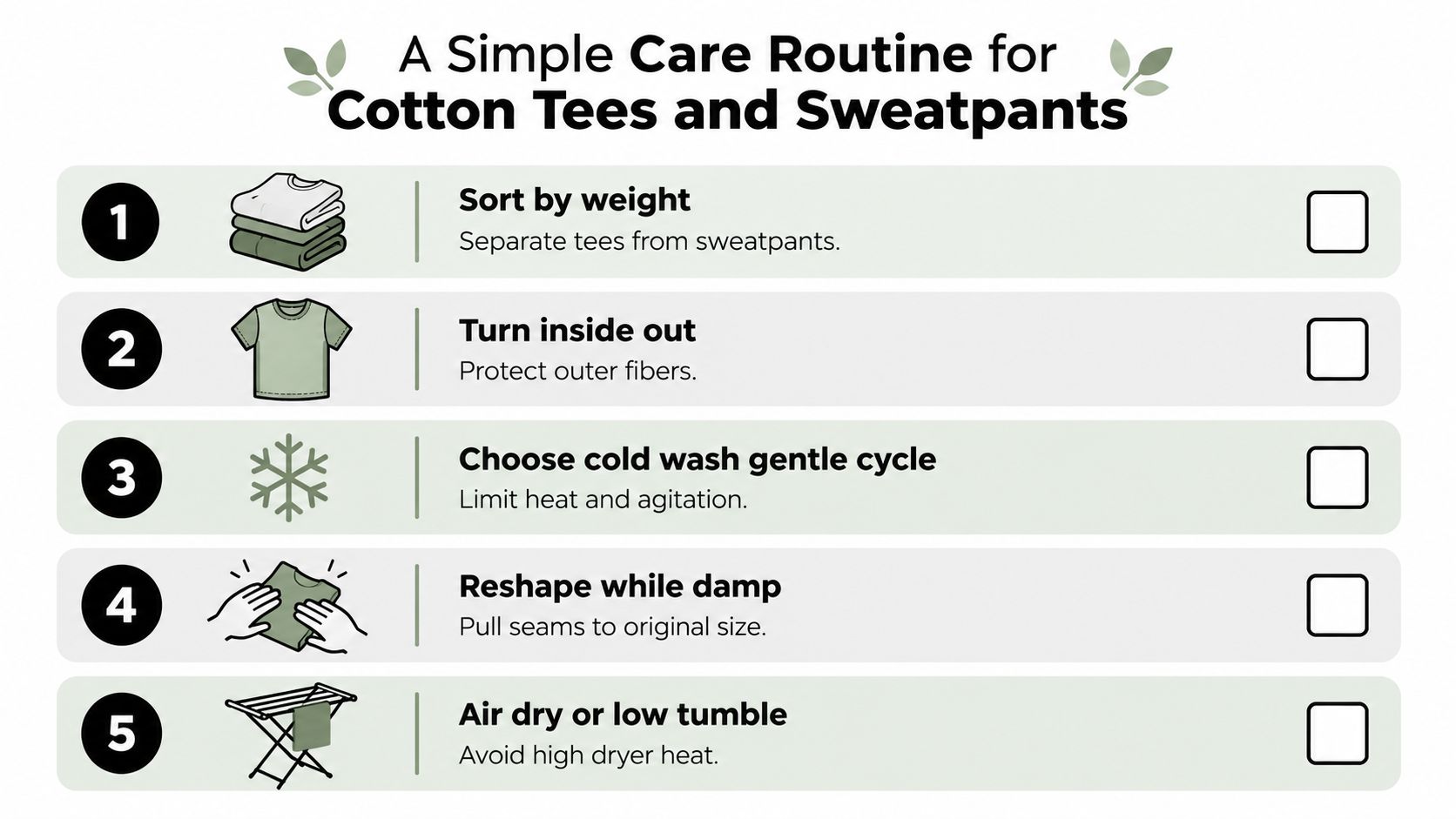
- Sort by weight and finish. Keep lightweight tees apart from heavy sweatpants when practical. Separate vintage-washed and snow-washed pieces from rough items such as towels, which can add friction.
- Turn garments inside out. This shields printed graphics and reduces direct rubbing on the outer surface. Zip fasteners and secure drawstrings before loading sweatpants.
- Choose a cool, gentle wash. Cold water is the safest general default. A 30°C gentle cycle is also a practical choice when the care label allows it, with a moderate or low spin to limit distortion.
- Skip unnecessary softener on looped fabrics. Fabric softener can coat fibers and affect the feel or absorbency of terry-loop materials. Use a suitable detergent and follow the garment's care instructions instead.
- Reshape immediately. Smooth the side seams, pull the hem gently back into line, and align cuffs before drying. This is especially useful for knits because damp fabric is easier to return to its intended shape.
Choose the drying path by garment
For a heavyweight ringspun tee, a short finish in a dryer on low heat can work if the garment needs to be softened or nearly dried. Remove it before it becomes bone-dry, then lay it flat or hang it in a way that doesn't stretch the shoulders.
For vintage-washed and snow-washed pieces, go straight to a flat drying rack whenever possible. That keeps the built-in lived-in shape from being tightened by unnecessary heat and helps the body, sleeve, and hem settle evenly.
Fold the garment while it's slightly damp only after reshaping it and allowing enough air circulation to prevent trapped moisture. Don't fold wet cotton tightly. The point is to avoid over-drying while keeping the garment's dimensions aligned.
A product such as the oversized unisex tee collection guide is useful context for shoppers whose fit depends on extra body room. Oversized proportions leave less room for an accidental length reduction before the silhouette feels different.
Keeping Cotton Honest Without Fussing Over Every Cycle
Cotton care becomes easier once you stop treating every wash as a new experiment. Most of the meaningful settling happens early, so the first few cycles deserve attention. After that, a consistent routine usually keeps the garment close to the shape it has established.
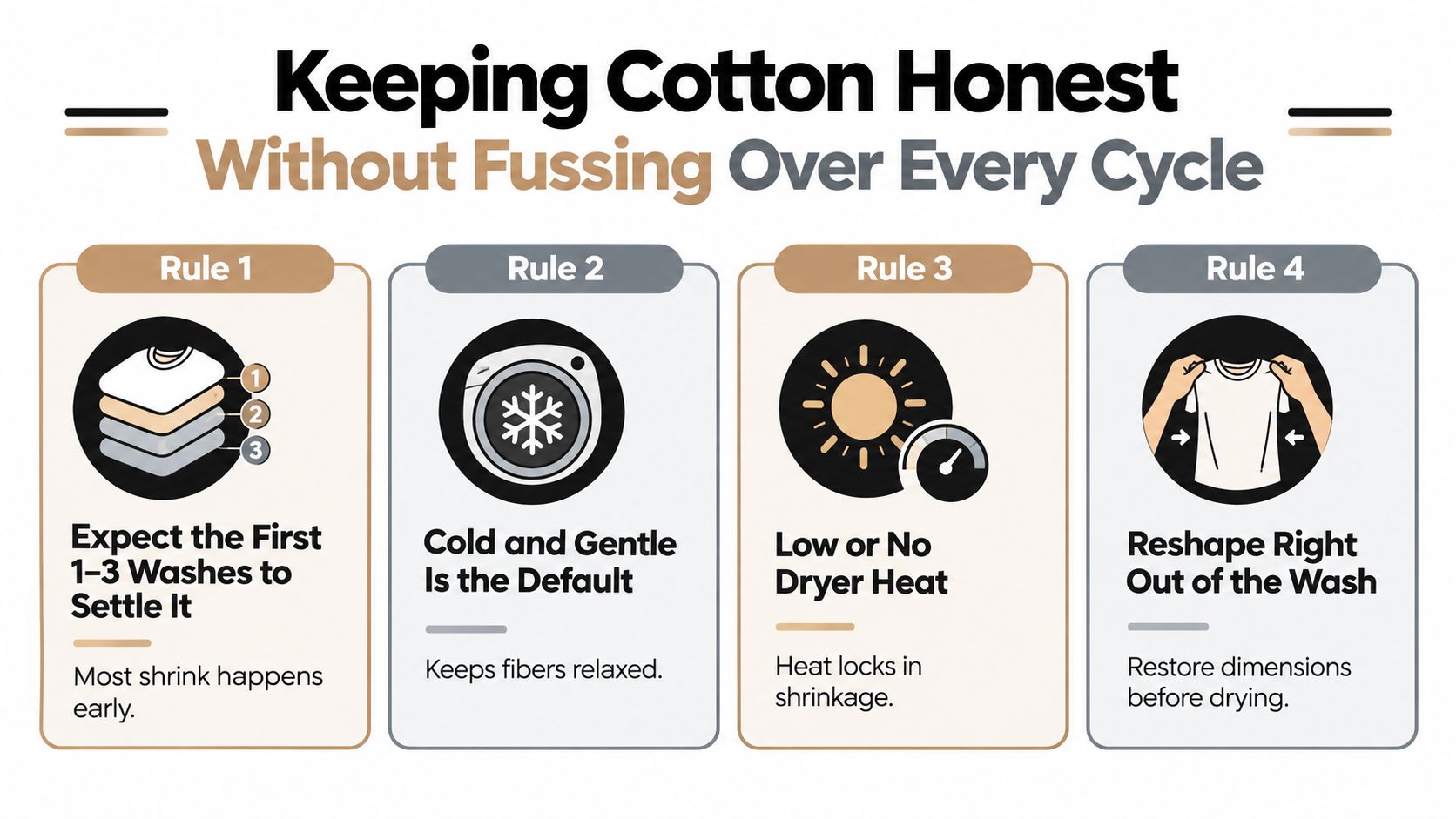
You can reduce the decision to four anchors:
- Cold water: Limit heat while the fibers and yarn structure relax.
- Gentle agitation: Reduce friction and repeated distortion.
- Low dryer heat or none: Avoid setting unnecessary contraction into the fabric.
- Reshape while damp: Restore hems, seams, cuffs, and body width before the garment dries.
A practical mental model
Ask three questions before washing:
- Is the cotton untreated or stabilized? Preshrunk and sanforized garments generally have less room to change than untreated cotton.
- Is it knit or woven? Looped jersey and fleece usually need more care than a stable woven structure.
- Does the fit depend on length or volume? Oversized tees, long sweatpants, and relaxed vintage silhouettes reveal small changes quickly.
That's enough information for most laundry decisions. You don't need to measure every shirt, and you don't need to avoid the washing machine. You need to protect the garments whose proportions matter.
The best habit is a one-time setup. Wash a new cotton favorite cool, use gentle movement, reshape it, and air dry it or finish it on low. Once you know how it settles, keep using the same routine instead of alternating between careful washing and high-heat shortcuts.
Your favorite tee doesn't need precious treatment every time. It needs cool water, restrained agitation, controlled drying, and a quick reshape. Give those choices priority during the first wash, especially with heavyweight vintage and snow-washed pieces, and cotton becomes much more predictable.
99 Collection offers casual unisex staples including pure cotton T-shirts, vintage-washed pieces, snow-washed styles, and sweatpants that fit naturally into a wardrobe built around relaxed basics. Visit 99 Collection to review the current collection, then use the care information for each garment to protect its intended fit and finish.