

You reach for a tee that used to feel dependable, and suddenly it's the one garment that keeps failing you. The collar curls after a few wears, the body has gone thin at the elbows, and bright light turns a once-solid shirt slightly sheer. That's usually the point where people start looking for heavyweight cotton T shirts, not because they want something trendy, but because they want a tee that still looks intentional after it leaves the hanger.
Table of Contents
- The Moment a Tee Stops Working
- What Heavyweight Cotton Means
- Why Weight Changes How a Tee Feels and Lasts
- Heavyweight vs Lighter Cotton in Real Wear
- How to Judge Quality Beyond the Listed Weight
- Fit Retention After the First Wash
- Styling Heavyweight Tees for Everyday Outfits
- Choosing the Right Heavyweight Tee for You
The Moment a Tee Stops Working
The failure is rarely dramatic. A standard tee usually doesn't tear all at once, it just starts acting tired. The neckband loses its snap, the side seams drift a little, and the shirt stops hanging cleanly against the body.
The clues show up slowly
A shirt can feel fine in the morning and still look off by afternoon. The fabric may cling after a commute, twist slightly after washing, or expose the outline of an undershirt when the sun hits it. Those small changes matter because they change how the whole outfit reads.
Heavy fabric gets attention for good reason, but thickness alone isn't what solves this problem. A tee can feel dense off the rack and still collapse after a few washes if the knit, yarn, or finishing isn't doing its job. That's why the better question isn't just “How thick is it?” It's “Will it keep its shape in real life?”
Practical rule: If a tee only looks good before laundry day, it's not really a wardrobe basic. It's a short-term placeholder.
The search for a better shirt usually starts there, with that quiet frustration of wanting one cotton tee that behaves more like a dependable layer than a fragile one. Weight helps, but it's only one part of the answer.
What Heavyweight Cotton Means
Cotton tee weight is usually measured in GSM, grams per square meter. That number tells you how much fabric sits in a square meter of cloth, so it is a practical way to compare density rather than rely on a quick hand feel. You may also see the same idea written in ounces per square yard, which is why two sizing systems often describe the same shirt.
The useful ranges
A common heavyweight threshold starts at 5.5 oz/yd², about 185 GSM, and 6.0 oz/yd² is roughly 203 GSM. Super-heavyweight styles begin around 7.0 oz/yd², or 240+ GSM, while standard tees often sit below the heavyweight range. That makes 5.5 oz/yd² a useful milestone, it marks the shift from a typical retail tee to something with more structure and a more substantial hand heavyweight weight reference.
Heavyweight cotton is also often described around 200+ GSM, with many heavyweight tees landing in the 200 to 220 GSM range and ultra-heavyweight options moving into roughly 240 to 300+ GSM AWDis heavyweight guide. In shopper terms, lighter tees feel airy and fluid, midweight tees sit in the everyday middle, and heavyweight tees feel denser, steadier, and less likely to fold in on the body.
| Tier | GSM Range | Ounce Equivalent | Feel & Use |
|---|---|---|---|
| Lightweight | Below about 150 | Below about 4.4 oz/yd² | Breezy, soft, good for hot weather and low-structure outfits |
| Midweight | About 150 to 200 | About 4.4 to 5.5 oz/yd² | Balanced drape, everyday wear, easier layering |
| Heavyweight | About 200 to 250+ | About 5.5 oz/yd² and up | Dense, structured, opaque, often chosen for premium basics |
| Super-heavyweight | About 240+ | About 7.0 oz/yd² and up | Very substantial, workwear-leaning, strongest structure |
The number matters, but yarn twist, knit density, and finishing shape just as much of the feel. Two tees can share a similar weight and still wear differently because one may drape softly while another holds its line after washing.
Why Weight Changes How a Tee Feels and Lasts
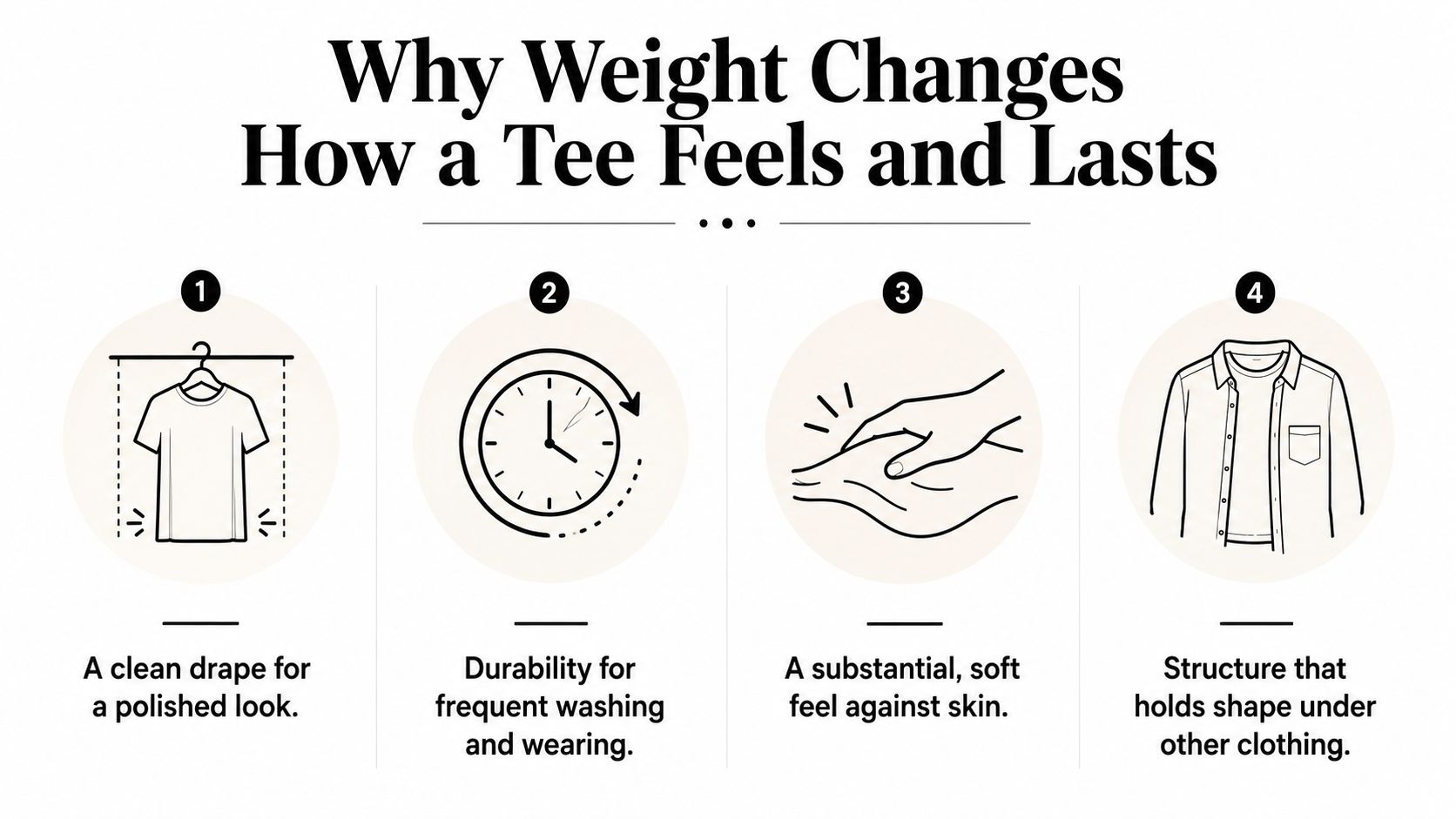
A heavier cotton tee changes the way fabric behaves on the body. Instead of hanging like a thin sheet, it tends to fall with more control, which means the shoulders look cleaner and the body line looks less fragile.
Structure, opacity, and everyday wear
A denser knit usually gives a tee more structure, and that's why it can hold its shape under a jacket or over a waistband without looking wilted. It also improves opacity, so the shirt is less likely to reveal the outline of what's underneath when you step into bright light. That's a big reason heavyweight tees often feel more polished even when they're dressed down.
Heavier cotton also tends to resist the kind of surface wear that shows up first at stress points. Collars, waist areas, and seams take repeated rubbing from bags, desks, belts, and washing, and a more substantial fabric usually handles that friction better over time. The result is not immortality, just a slower slide into the thin, tired look that makes a shirt feel disposable.
A tee with more body often looks better after a long day because the fabric doesn't fold in on itself as easily.
There's a trade-off, though. The same density that gives shape can also make the shirt feel warmer and less fluid against the skin. That's why heavyweight cotton works best when structure is part of the goal, not when breathability is the only thing that matters.
Heavyweight vs Lighter Cotton in Real Wear
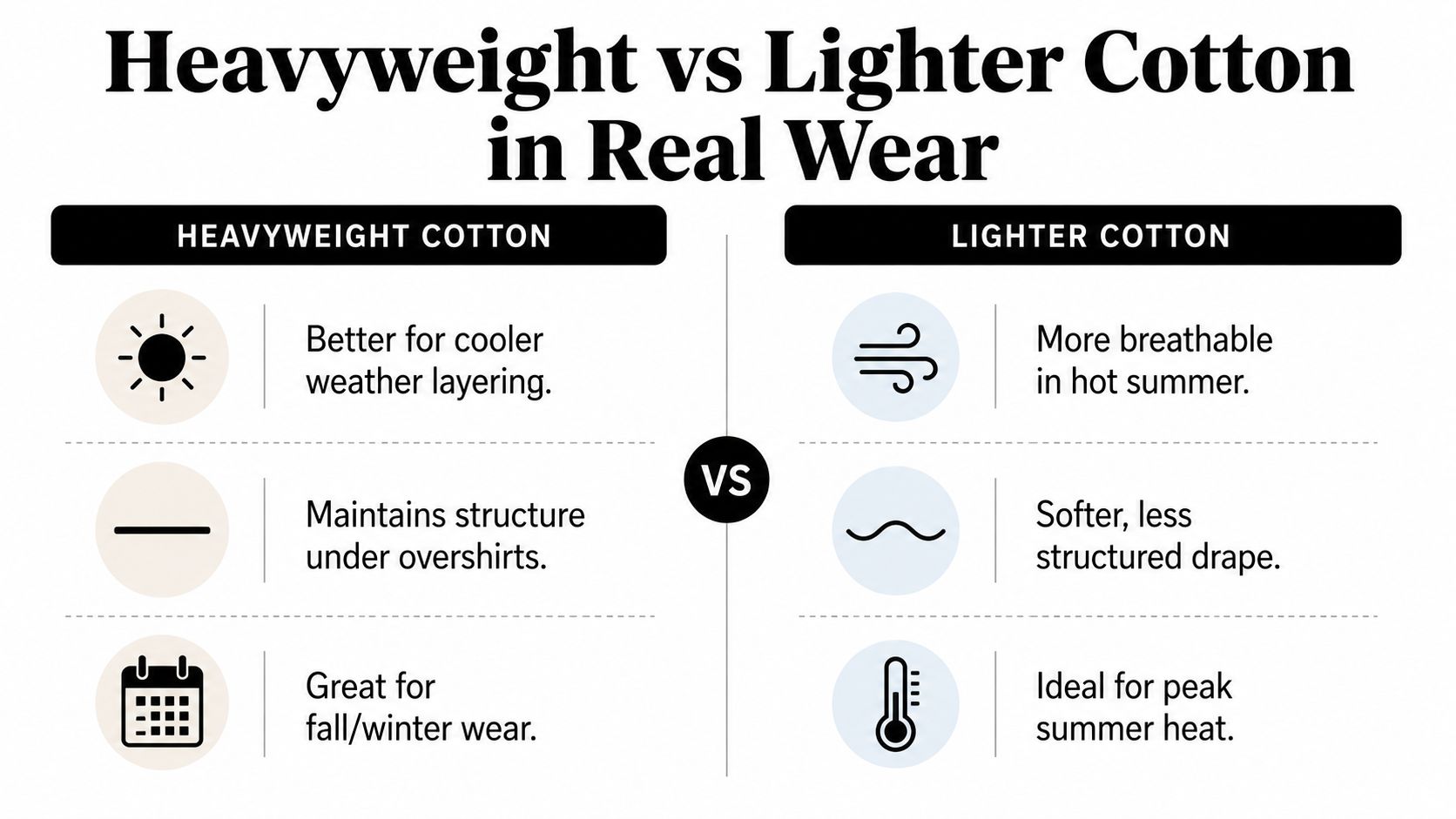
Heavyweight cotton and lighter cotton solve different problems. One gives a tee more shape and presence. The other keeps it cooler and easier to wear when airflow matters.
Where each one fits
A heavyweight tee usually earns its place as the main layer. In cooler weather, or under an overshirt or jacket, it holds a cleaner line and looks intentionally substantial instead of flimsy. That makes it a better match for outfits built around structure, where the shirt should stay visible and keep its shape through the day.
A lighter tee does a better job in heat. It sits closer to the skin with less resistance, and the fabric gives moisture and air a bit more room to move. In humid weather, that difference shows up quickly. The shirt may look less defined, but it is easier to live in for long stretches outside.
The middle ground matters too. A mid-weight tee near the heavyweight range can work well in variable climates, because it gives some body without feeling as dense as a workwear-style shirt. For a closer look at one example of that everyday fit, see this unisex pure cotton tee.
Heavyweight tees excel when structure is the goal. Lighter tees remain the better choice in hot, humid climates where airflow matters most.
How to Judge Quality Beyond the Listed Weight
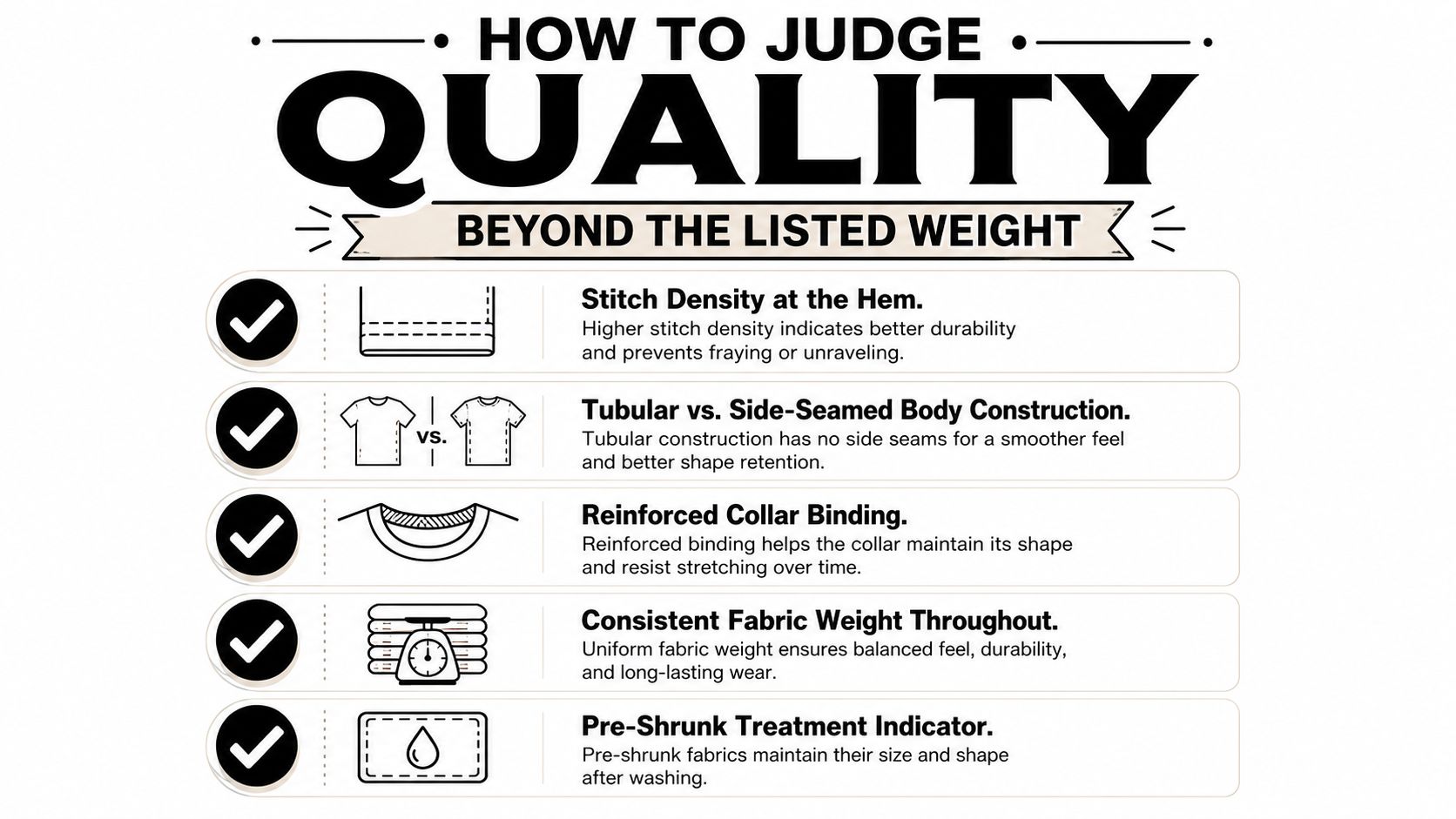
A listed weight tells you the starting point, not the finish. Two shirts with the same GSM can feel very different once you look at the way they're built.
Construction tells you more than the product title
Check the hem stitching, because tight, even stitch density usually points to better finishing. Look at whether the body is tubular or side-seamed, since side seams often help the shirt sit more predictably on the torso. A taped shoulder and a collar with good recovery also matter, because those are the places where low-quality tees start sagging first.
The yarn itself changes the hand feel. Combed ringspun cotton usually feels smoother than open-end carded cotton at the same weight, because the yarn is spun more tightly and tends to produce a cleaner surface. A garment-dyed tee can also feel softer and look more broken-in from the start, but it may fit a bit differently than a raw or reactive-dyed version.
Online, the most useful listings show interior seams, fabric weight per square meter, and where the knit was made. In person, stretch the collar gently and let it snap back, then hold the shirt up to light to see how opaque the knit really is. If the fabric feels dense but recovers poorly, it's not as strong as the weight suggests.
A product like this waffle raw edge tee is a good reminder that finish can change the whole personality of a garment, even before you factor in weight.
Fit Retention After the First Wash
A heavyweight tee can feel a little rigid at first. That stiffness often comes from the way the cotton has been finished, not from poor comfort. The first wash shows whether the shirt was made to keep its outline or only to look substantial on the rack.
What happens after laundry
If the cotton is preshrunk, much of the shrinkage has already been handled before the shirt reaches you. Sanforization works in a similar way, stabilizing the cloth so it changes less after washing. Untreated cotton responds more noticeably, because heat and moisture release some of the tension stored in the fibers.
Care still shapes the result. Cold wash, inside-out, mild detergent, and air-dry are the safest defaults if you want the body length and sleeve break to stay close to the original fit. Hang-drying usually keeps the shape better than high-heat tumble drying, which can tighten the shirt and roughen the surface over time.
Practical rule: If you buy heavyweight cotton for an oversized fit, one hot dryer cycle can make the call for you.
With gentle handling, heavyweight cotton usually softens into a more comfortable hand over time. The shirt loses some of its newness, yet the underlying structure remains intact, which is often why wearers keep returning to it.
Styling Heavyweight Tees for Everyday Outfits
A heavier tee changes the outline of an outfit, so it works best when the rest of the clothes can support that presence. Thin, clingy tops often disappear into an outfit, but a denser shirt can become the anchor.
Three ways the cut changes the look
A boxy cropped tee works well with wide-leg trousers because the proportions stay relaxed without looking sloppy. The shorter body keeps the silhouette from swallowing the waist, and the thicker fabric helps the top hold a clean horizontal line. That pairing feels intentional rather than oversized by accident.
A dropped-shoulder heavyweight tee works better on its own with selvedge denim or similarly sturdy bottoms. The bigger shoulder line and stronger collar create a heavier top half, so the jeans need enough visual weight to balance it. If the pants are too slim, the shirt can dominate the outfit.
Mid-weight tees in the 220 to 260 GSM zone often do the most work in transitional weather. They layer under overshirts without bunching too much, but they still have enough body to stand on their own when the outer layer comes off. That's why sleeve opening, rib collar weight, and body length matter just as much as the fabric number.
Garment-dyed heavyweight cotton usually reads more saturated and casual, while reactive-dyed cotton tends to look sharper and cleaner in minimalist wardrobes. Color treatment changes the mood of the shirt more than many shoppers expect, even when the fabric weight stays the same.
Choosing the Right Heavyweight Tee for You
A heavyweight tee should earn its place in your wardrobe because it fits how you wear clothes. The right one matches your climate, your usual outfits, and the kind of care you're willing to give it after washing.
A simple decision path
Start with climate. In hot, humid weather, a dense tee can feel better under air conditioning than on a long outdoor walk. In cooler months, that extra body helps the shirt sit away from the skin and hold its shape.
Then judge the feel in hand and on body. A shirt near the heavyweight range may already give you enough structure for everyday wear, while a much denser version can feel stiff if you prefer a softer drape. After that, look closely at the construction. Collar shape, seam finish, and ribbing often determine whether the tee reads clean and settled, or just bulky.
Care habits matter too. Cold washing and air-drying usually help the fabric keep its fit, while regular tumble drying asks more of the shirt's finishing and cut. If you want a tee that can handle that routine, choose one with enough room through the body and a finish meant to age well, such as the feel you get from a heavyweight vintage washed frayed T-shirt.
That's the core lens for heavyweight cotton: choose based on how the shirt holds up over time, not just on how substantial it feels on day one.
Powered by the Outrank tool