

You're standing in front of the closet with two competing needs. You want something soft enough for errands, travel, and long days at home, but you don't want to look like you gave up on getting dressed. Khaki jogger sweatpants solve that problem because they sit in the middle ground, relaxed like loungewear, but neater than the usual gym-only pair.
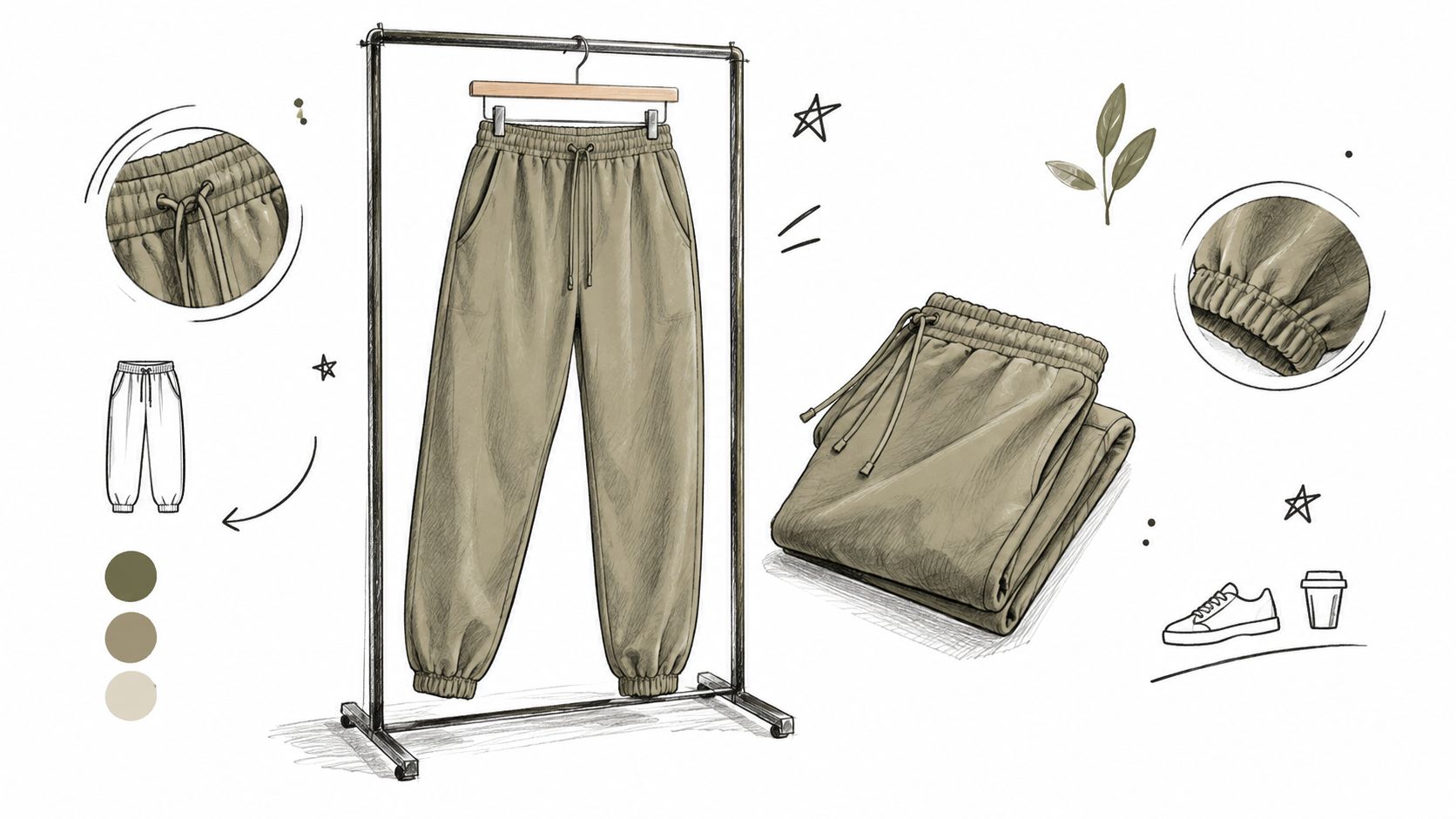
The khaki tone matters more than people first think. Gray can read very casual, black can feel sharp but heavy, and khaki lands in a more natural middle zone that works with white, cream, olive, denim, and other earth tones. If you want one bottom that can move from sofa to street without a costume change, a good place to start is the practical guide to best jogger sweatpants.
Table of Contents
- Introduction to Khaki Jogger Sweatpants as Everyday Essentials
- How Sweatpants Became a Casual Wardrobe Staple
- Understanding Fabric Blends Weight and Feel
- Finding Your Best Fit and Silhouette
- Styling Khaki Joggers for Different Occasions
- Keeping Color Shape and Comfort After Every Wash
- Building a Simple Wardrobe Around Khaki Joggers
Introduction to Khaki Jogger Sweatpants as Everyday Essentials
A pair of khaki joggers usually earns its keep on the days that start loosely and then become public. You might put them on for a work-from-home morning, then end up answering the door, grabbing lunch, or meeting someone for coffee. The appeal is simple, they feel easy, but they still look considered.
Why the silhouette feels different
The jogger shape is what changes the mood. Elastic cuffs keep the leg from flopping around, and the relaxed taper gives the pants a cleaner line than wide sweatpants. That shape makes khaki jogger sweatpants easier to wear with sneakers, slides, or even a more polished shoe if the rest of the outfit stays minimal.
Khaki also helps because it behaves like a neutral foundation instead of a loud style statement. It doesn't pull as hard toward sportswear as bright colors can, and it doesn't carry the same stark contrast as black. That makes it useful in wardrobes where people want comfort, but still care about proportion, texture, and color balance.
Practical rule: if a sweatpant looks too casual in your mirror, the quickest fix is often not the top, it's the color and taper of the bottom.
A helpful way to think about these pants is as a bridge piece. They sit between home wear and polished casual, which is why they work for so many daily situations. That middle position is also why buyers keep asking the same questions, what fabric feels best, how much shrinkage to expect, and how to keep the khaki tone looking clean after washing.
How Sweatpants Became a Casual Wardrobe Staple
The modern jogger didn't appear out of nowhere. Sweatpants began in the 1920s, when Émile Camuset of Le Coq Sportif introduced the first version as athletic wear, and by the 1930s they had already expanded into tracksuits. By the late 1930s, sweatpants were commonplace at the Olympic Games, which tells you they started as serious performance clothing, not casual fashion. That history is documented in the history of sweatpants.
From sports gear to daily clothing
The shift into everyday wear happened much later. Sources note that sweatpants started emerging as casualwear in the 1960s and 1970s, and the 1980s marked the point when wearing them outside sports became broadly acceptable. The 1964 introduction of the Adidas tracksuit also helped make athletic fashion more visible globally, so the line between training wear and street wear kept getting thinner over time.
That is the important context for khaki jogger sweatpants. The jogger silhouette is a later styling evolution of the same garment family, with a more precise taper and elastic cuff that make it feel less like old-school gym pants. Khaki adds another layer of usefulness, because the neutral color makes the garment easier to place inside mainstream casualwear and athleisure wardrobes.
The market backdrop supports that shift. A recent industry report values the global athleisure market at USD 402.74 billion in 2026 and projects USD 844.77 billion by 2034, with a 9.7% CAGR over the forecast period, according to market coverage summarized in the jogging pants trends report jogging pants trends. Another market report places the global joggers and sweatpants market at about USD 14.7 billion in 2025 and forecasts USD 26.8 billion by 2034, with a 6.9% CAGR in the same overview. Those figures show a category that's broad, established, and still expanding.
Why the category keeps growing
The reason is straightforward. People want clothing that can serve more than one setting. Joggers now sit alongside hoodies, sweatshirts, leggings, and athletic shorts inside athleisure segmentation, which means they're no longer treated as a niche or temporary trend. They're part of a mainstream wardrobe system built around comfort, movement, and simple styling.
Understanding Fabric Blends Weight and Feel
Fabric choice changes everything here. Two joggers can look almost identical on a product page, then feel completely different once you sit down, walk outside, or wash them a few times. The biggest difference usually comes down to fiber blend, fabric weight, and knit stability.
Cotton and polyester do different jobs
A 100% cotton jogger tends to feel softer and more familiar at first touch, but cotton typically retains about 8.5% or more moisture under standard conditioning, while polyester's hydrophobic structure reduces moisture regain to about 0.4% in the comparative textile study published in textile moisture management research. In plain language, cotton behaves more like a sponge, while polyester behaves more like a quick-dry towel.
That same research found that cotton/polyester fabrics performed better than cotton alone in water absorption, diffusion radius, and spread speed, although they had lower vertical wicking than polyester-rich fabrics. So a balanced blend can give you everyday comfort without the slow-dry drawback that pure cotton sometimes brings.
A good blend doesn't try to do one thing perfectly, it tries to do several things well enough for daily life.
A concrete example helps. The Essential Jogged Sweatpants are listed in an 80% cotton, 20% polyester blend, with 9.1 oz/yd² (310 g/m²) fabric weight and moderate thickness. That kind of build usually signals a mid-range feel, not too flimsy, not overly heavy, which is useful if you want joggers that can work across seasons.
What weight and structure change
Weight affects drape. Lighter fabric hangs more loosely and can feel breezier, while a heavier knit tends to hold shape and look more deliberate. Knit structure matters too, because a more stable fabric can reduce knee bagging and help the jogger keep a cleaner line through the leg.
For shoppers who already like heavier tees, the logic usually carries over. The guide to heavyweight cotton t-shirts makes a similar point about construction and presence, and the same idea applies to joggers. Fabric that is too thin can feel casual in a way that's hard to improve, while fabric that's too dense can feel rigid if you wear it indoors most of the day.
If you want a simple rule, start with your climate and your routine. Softer, higher-cotton blends feel good for lounging and slower days, while cotton-poly blends usually make more sense if you care about wash recovery, movement, and quicker dry-down.
Finding Your Best Fit and Silhouette
Fit is where most confusion starts. A lot of shoppers know they want joggers, but they're unsure whether to choose a cleaner taper, a looser streetwear stack, or a roomier rise that feels more unisex. The answer depends less on trend and more on how you want the pants to sit at the waist, hip, and ankle.
Reading measurements without overthinking them
A mid-waist jogger usually sits lower than traditional trousers but higher than ultra-low styles, which makes it easier to pair with tees, hoodies, and longer layers. Elastic waistbands and drawstrings add flexibility, so the written size is only part of the story. If you like a more relaxed drape, sizing up can help, while staying true to size often gives a neater cuff and a more defined taper.
Here's a quick reference for the first-party sizing snapshot on the women's Essential Jogged Sweatpants:
| Measurement | S | M | L | XL |
|---|---|---|---|---|
| Length | 39.76 in, 101 cm | 40.16 in, 102 cm | 40.55 in, 103 cm | 40.94 in, 104 cm |
| Waist | 13.39 in, 34 cm | 14.17 in, 36 cm | 15.35 in, 39 cm | 16.54 in, 42 cm |
| Hip | 22.24 in, 56.5 cm | 23.03 in, 58.5 cm | 24.21 in, 61.5 cm | 25.39 in, 64.5 cm |
How silhouette changes the look
A slimmer taper can make the ankle look intentional, especially with low-profile sneakers. A looser leg gives a more relaxed streetwear feel, but it can also shorten the visual line if the cuff bunches too much. That's why the cuff matters, it frames the shoe and gives the jogger its identity.
For unisex wearers, clear thinking helps. Unisex fit standards, adjustable waists, and flexible sizing are now common expectations in casual basics, so the decision usually comes down to proportions rather than labels. If you prefer a roomier look, check how much stacking you want above the cuff. If you want a cleaner line, keep the ankle closer to the shoe.
If your goal is a polished casual outfit, the best fit is usually the one that gives shape without squeezing the thigh.
Styling Khaki Joggers for Different Occasions
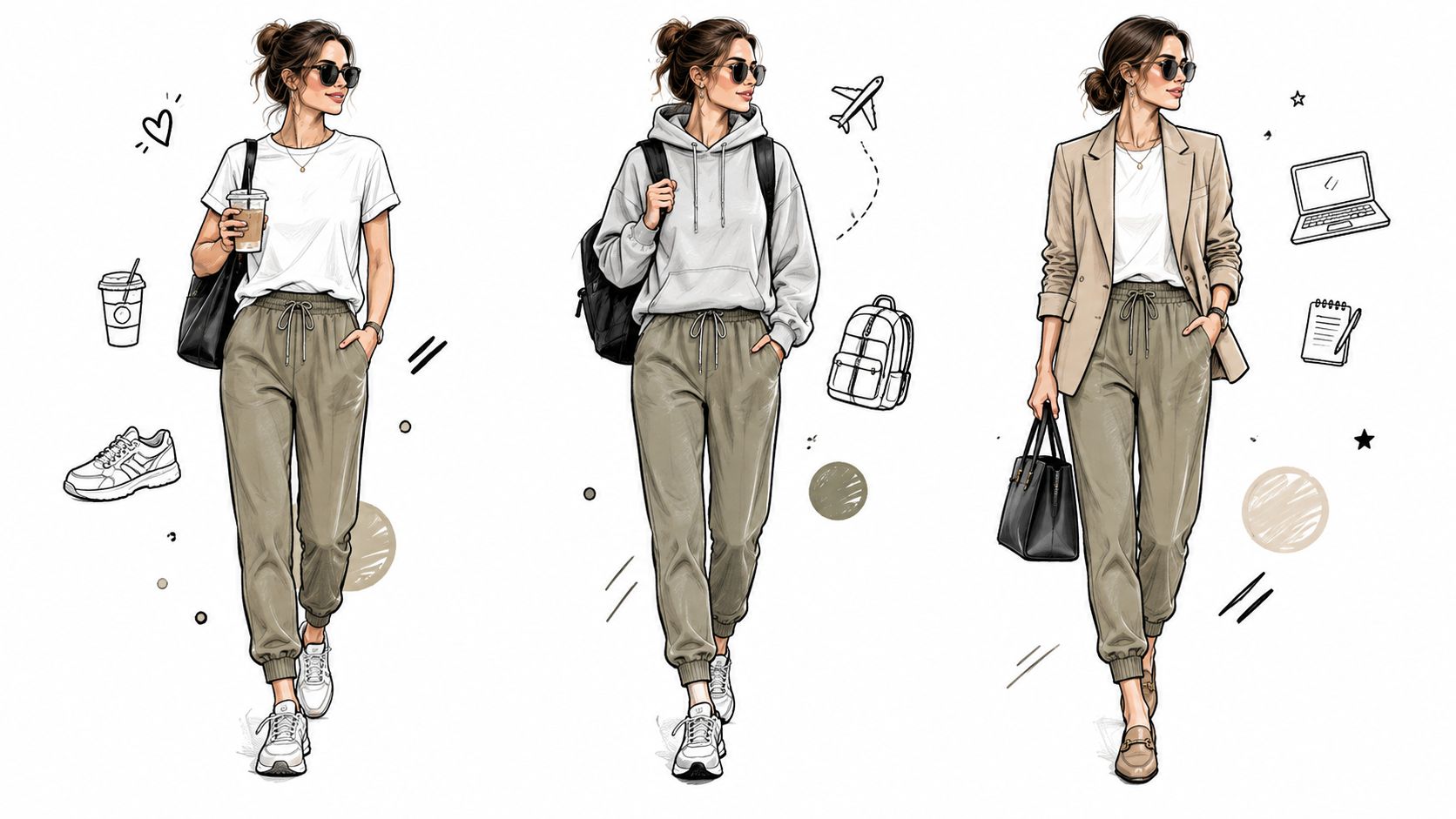
The easiest way to style khaki joggers is to treat them like a neutral base, not the star of the outfit. That gives you more room to shift the tone with tops, shoes, and outerwear. They can look relaxed with a tee, more composed with a structured layer, or polished when the rest of the outfit stays clean.
A useful pairing is an oversized cotton top with soft structure. The Snow Washed Oversized Cotton T-Shirt is a 100% cotton, 7.4 oz/yd² (250 g/m²) unisex tee with a loose fit, drop shoulder, and slight stretch, so it can balance the tapered shape of joggers without looking stiff. That kind of proportion works especially well when the pants carry the visual weight and the top adds ease.
Outfit formulas that feel believable
For errands, a khaki jogger with a white tee and simple sneakers looks clean without trying hard. For travel, add a lightweight overshirt or zip layer, because the khaki base keeps the outfit calm even when the top layers get more textured. For a casual office or a faith-community setting, a darker knit or a boxier tee under a neutral jacket can make the jogger read more intentional than athletic.
Shoes matter more than people expect. Sneakers keep the outfit casual, but loafers or minimal slip-ons can push it toward polished casual if the jogger's fabric weight and taper are neat. Earth-tone color pairing works best when the palette stays close, cream, olive, brown, black, and washed denim all sit naturally beside khaki.
The styling guide on jogger sweatpants black is useful as a contrast point, because black joggers usually read sharper and heavier, while khaki brings a softer, warmer mood. That difference is why khaki often feels more flexible in modest, minimalist, and unisex wardrobes.
Seasonality matters too. Lighter fabrics work better when the goal is airflow, while moderate to heavier knits can support a more anchored silhouette in cooler weather. The outfit doesn't need a lot of pieces, just a coherent tone, a balanced shape, and shoes that match the level of polish you want.
Keeping Color Shape and Comfort After Every Wash
Khaki looks forgiving from a distance, but neutral tones can show wear in a way brighter colors don't. The long-term test is whether the pant keeps its shape, keeps its tone, and keeps its drape after repeated laundering. That's why care details matter just as much as style details.
What to watch in the fabric
Color retention depends on both dye chemistry and friction during wear and washing. Neutral technical testing on khaki fabrics reports wash color-fastness ratings around 4 to 4-5 on a 5-point grey-scale standard, which means the fabric resists visible fading fairly well, but not perfectly. In practical terms, repeated washing can still change the look, especially on cuff edges, knees, and seams where friction is highest. The technical reference behind that rating appears in khaki fabric testing notes.
Shrinkage is the other quiet issue. Fabric guidance notes that 100% cotton fleece sweatpants can lose about 3-5% in length under hot wash and tumble-dry conditions, while cotton/poly blends usually shrink less. That matters because a jogger's silhouette depends on cuff position, inseam length, and how much the leg stacks over the ankle. The care discussion in sweatpants shrinkage guidance is useful because it shows how washing can change fit, not just feel.
Simple care habits that protect the shape
The safest habit is to wash gently, dry low, and avoid harsh bleach. Those steps line up with the care labels on the catalog items already mentioned, which recommend machine wash at 30°C, gentle cycle, tumble dry low, and no bleach. For a jogger, that kind of care helps preserve both the cuff shape and the khaki tone.
Treat the knee and ankle areas like high-use zones, because that's where wear shows first.
Moderate fabric weight and a stable knit help prevent bagging, especially around the knees. If you're choosing between two similar joggers, the one with better structure usually keeps a cleaner look longer. That's especially important for khaki, because faded neutral fabric can look dusty instead of lived-in if the base cloth isn't holding together well.
Building a Simple Wardrobe Around Khaki Joggers
Khaki jogger sweatpants work best when you let them do what they're designed to do, bridge comfort and polish. If you want one pair that fits into a minimal wardrobe, compare three things first, the fabric blend, the fabric weight, and the silhouette at the ankle. Then check the care label and ask whether the pair will stay close to the shape you want after washing.
A simple wardrobe around them doesn't need much. Start with a clean tee, a heavier tee for cooler days, one relaxed layer, and shoes that can move between casual errands and low-key outings. The goal is not to chase every trend, it's to have one bottom that plays nicely with what you already own.
Khaki stands out because it's easy to wear across contexts without looking costume-like. It can feel lounge-adjacent at home, then look composed enough for travel, casual meetings, or community settings when the rest of the outfit is tidy. That's why it keeps showing up as a staple rather than a novelty.
If you're choosing your first pair, use this short checklist, neutral tone, stable fabric, easy care, and a taper that matches your shoes. If those boxes line up, the pants will probably work harder in your wardrobe than most trend items ever do.
If you're building a wardrobe around dependable basics, 99 Collection offers unisex essentials that fit this exact use case, including tees, tanks, and jogger-style bottoms with a clean, lived-in look. Visit 99 Collection to browse pieces that can pair easily with khaki joggers and help you build a simple rotation of everyday outfits.