

You can own a closet full of clothes and still feel like you have nothing to wear. The problem usually isn't quantity, it's that too many pieces compete for attention, while none of them work together. Minimalist streetwear solves that by making fit, fabric, and proportion do the heavy lifting, so a simple outfit can look deliberate instead of random.
That shift matters because streetwear didn't start as a loud, polished system. Its roots trace back to skateboarding, hip-hop, and surf culture in the 1980s and 1990s, with early commercial markers like Shawn Stussy's signature tees and Supreme's limited-drop approach shaping the category that came later as outlined in the streetwear culture overview. Today, that broader market is described as roughly $185 billion globally in 2024, growing around 9% annually, with 62% of Gen Z identifying with streetwear culture from the same market overview. Minimalist streetwear sits inside that scale as the quieter, more controlled branch of the look.
Table of Contents
- Introduction to Minimalist Streetwear That Feels Intentional
- What Minimalist Streetwear Really Means Today
- Core Wardrobe Pieces and Why Fabric Weight Matters
- Color Palettes and the Quiet Versus Maximalist Choice
- Outfit Formulas Using Unisex Basics for Every Day
- Sourcing Sustainability and Shopping Smarter for Longevity
- Building Your Minimalist Streetwear System That Lasts
Introduction to Minimalist Streetwear That Feels Intentional
A lot of people reach a point where their wardrobe feels busy but uninspiring. There are tees, sweatshirts, joggers, and a few jackets, yet every outfit feels like a compromise because the pieces don't share the same logic. Minimalist streetwear gives that closet a stronger rhythm by reducing visual noise and making the clothes work as a system, not as isolated purchases.
Why less can feel more styled
The appeal isn't about wearing plain clothes and hoping they pass as fashion. It's about choosing garments that hold their shape, sit well on the body, and create clean lines without asking for extra decoration. A good oversized tee can look sharper than a graphic shirt if the shoulders land correctly and the fabric has enough weight to drape properly.
That's why this aesthetic works well for unisex wardrobes, faith-inspired dressing, and gift buying too. You're not shopping for an identity statement that only works one way, you're choosing versatile basics that can shift across body types and settings.
Practical rule: If a simple outfit feels boring, the issue is usually cut, texture, or balance, not the color palette.
A useful way to think about it is as a styling language. You learn the rules first, then you can repeat them without looking repetitive. That's what makes the look approachable, especially if you're trying to build around clean tees, relaxed bottoms, and neutral layers that can be worn often.
What Minimalist Streetwear Really Means Today
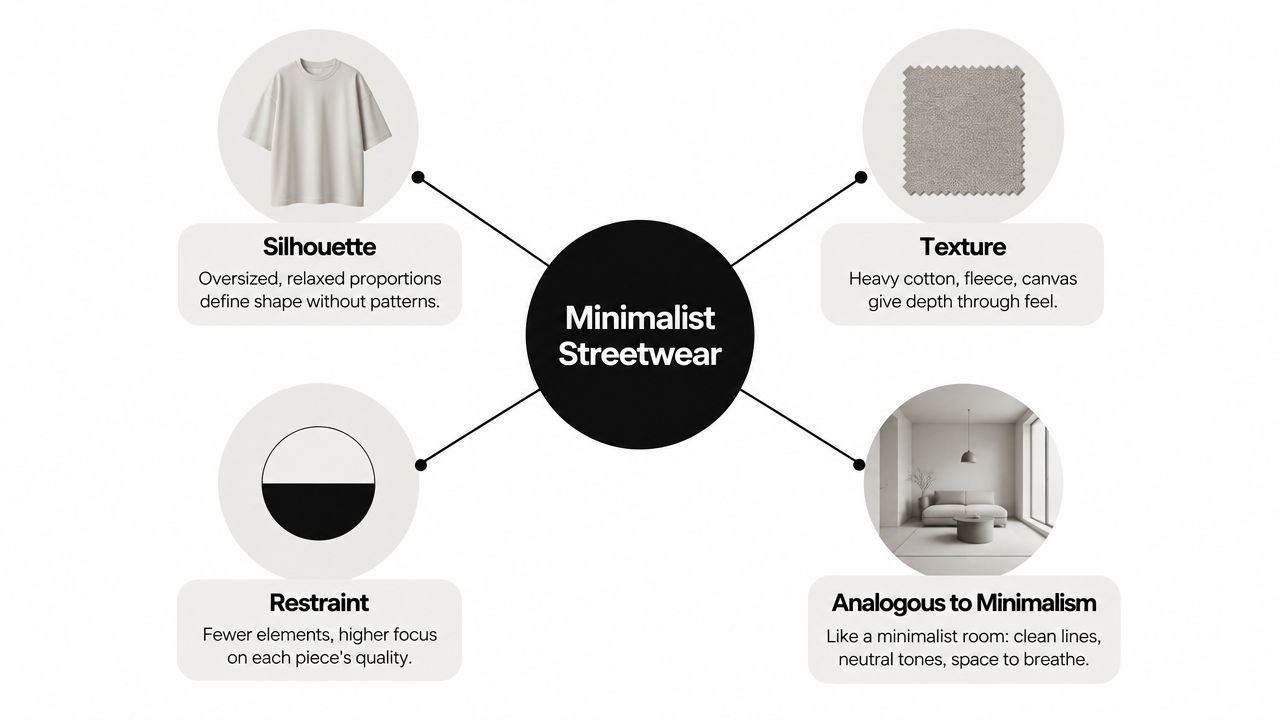
Minimalist streetwear keeps the relaxed attitude of streetwear while reducing visual noise. Tees, joggers, casual layers, and sneakers remain, but heavy graphics, oversized logos, and short-lived trends no longer carry the outfit. The result feels calm because each piece has a clear role.
The strongest difference appears in fabric and fit. A neutral tee can look plain when it is thin, limp, or poorly proportioned. The same simple tee feels considered when its weight gives the body shape, its wash adds quiet texture, and its cut creates a deliberate outline. Color sets the volume, but cloth and construction control the finish.
Generic minimalism can drift toward office basics or plain athleisure. Minimalist streetwear keeps a street-rooted shape language, including oversized tees, boxy layers, relaxed bottoms, and sneakers, then removes the clutter around them. It stays casual, with more control over proportion and surface.
How to recognize it in the wild
Start with silhouette. Dropped shoulders, oversized tees, and relaxed blocks create the outline before prints do. Then check restraint. Branding is subtle or absent, so the garment's proportions stay visible.
Texture supplies the interest that color often provides elsewhere. A snow-wash, heavyweight cotton, or matte fleece can add depth while keeping the palette quiet. The Snow Washed Oversized Cotton T-Shirt shows this approach through its 100% cotton construction, 7.4 oz/yd² (250 g/m²) fabric weight, drop shoulder, and loose fit.
A simple test helps: minimalist streetwear should look calm from a distance and reveal detail up close. If a look depends on a large logo or loud print, the fabric, fit, and texture are not doing enough work.
The same principles support gender-neutral clothing for adults, where fit, versatility, and everyday wear need to work across different bodies.
Core Wardrobe Pieces and Why Fabric Weight Matters
A plain tee can look polished at a coffee shop, then look unfinished under harsh fitting-room lights. The difference usually comes from how the layers work together, especially the fabric weight, wash, and cut.
The pieces that do the most work
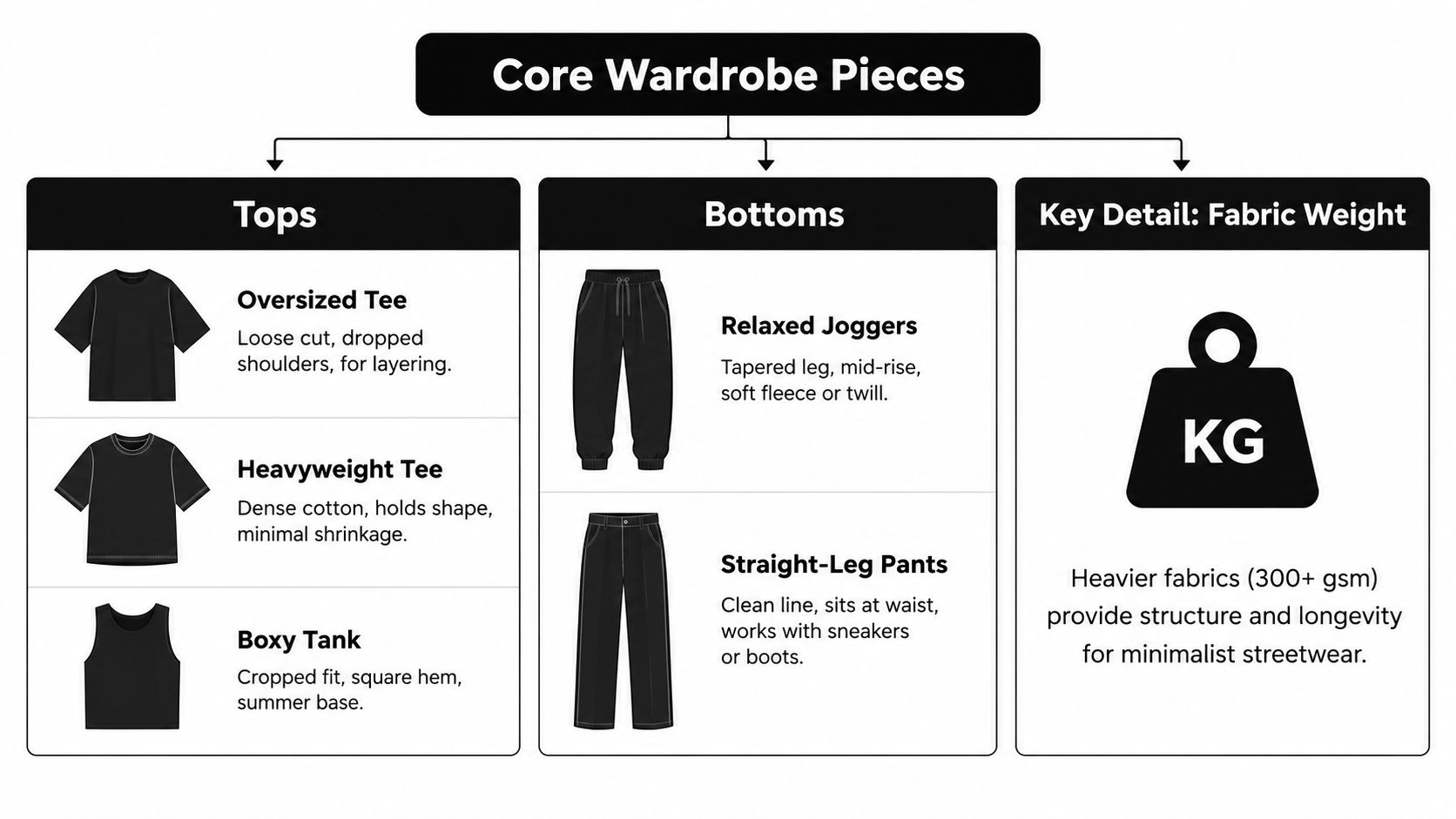
Build around oversized tees, heavyweight tees, boxy tanks, relaxed joggers, and straight-leg pants. These pieces cover daily dressing because they work alone in warm weather and layer under overshirts or jackets when temperatures drop. A boxy tank creates a clean summer base. A relaxed jogger keeps the outline soft while still looking controlled.
Fabric weight changes the way a garment holds its shape. A thin tee may cling, twist, or collapse at the hem, while a heavier tee can create a steadier drape. Heavier streetwear tees are commonly made from 240 to 280 GSM cotton in purpose-built oversized blocks, while washes and finishing can add about 15 to 20 GSM as the fabric tightens during laundering as explained in the heavyweight T-shirt guide. The cut matters just as much. Shoulder width, armhole depth, sleeve opening, body length, and hem shape decide whether that weight looks structured or merely bulky. For a closer explanation of material choices, see this heavyweight cotton T-shirts guide.
A useful rule is simple: fabric weight supplies the foundation, while the cut directs it.
What to check before you buy
Use this checklist when a product page looks promising:
- Fabric weight: Look for a listed number that suggests whether the tee will drape or collapse.
- Cut details: Dropped shoulders, sleeve length, and body width should create a deliberate outline.
- Wash behavior: Snow-wash, enzyme wash, stone wash, and acid wash change softness and surface feel. Check that the finish still suits the garment's proportions.
- Recovery: The collar and ribbing should return to shape instead of sagging after wear.
- Shrinkage planning: Measurements should remain practical after laundering, especially when ordering repeatedly.
The Heavyweight Vintage Washed Frayed T-Shirt demonstrates this approach through its name alone. It points you toward three details to inspect: weight, wash, and edge treatment. Those details affect how simple the finished outfit feels. A flimsy tee can make neutral pants look ordinary. A denser tee with a balanced cut gives the same outfit a cleaner, more premium appearance.
Heavy fabric doesn't automatically make a garment better, but it gives a cleaner foundation for shape, drape, and repeat wear.
That is why minimalist streetwear rewards attention to construction over branding. A logo may catch attention briefly. Fabric density, surface texture, and fit determine whether the outfit continues to look right throughout the day.
Color Palettes and the Quiet Versus Maximalist Choice
The current style split is real. Some people want monochrome, quiet branding, and muted silhouettes. Others want loud graphics, stacked accessories, and more visual energy. Minimalist streetwear sits on the quieter side, but it doesn't have to look timid.
Neutral doesn't mean flat
A strong minimalist palette often starts with off-white, bone, charcoal, washed black, olive, and stone. Those colors work because they don't fight the silhouette, they support it. Texture does the rest, especially when a snow-wash or vintage wash adds depth without needing brighter color.
That matters when you're trying to avoid looking generic. Two outfits can both be neutral, but the one with better proportion and material contrast will look far more intentional. A boxy tee with a soft matte finish feels different from a slick, thin tee in the same color, and that difference is often what separates “basic” from polished.
Quiet buys versus loud buys
| Direction | What it gives you | What it risks |
|---|---|---|
| Quiet minimalist | Easier outfit rotation, stronger fabric focus, more longevity | Looking too plain if fit is weak |
| Maximalist streetwear | Strong visual identity, statement energy | Harder to repeat, easier to tire of |
The smarter choice depends on how you dress most days. If you want pieces that can move from school, errands, and casual nights out without much thought, the quiet route is more forgiving. If you want garments to act as the focal point, maximalism gives you that, but it asks for more styling confidence and more tolerance for trend shifts.
The trick is not choosing “plain” over “bold.” It's choosing whether the outfit will get its energy from graphic impact or from cut, texture, and how the pieces sit on the body. Minimalist streetwear is the second path, and that's why it stays useful even when trend direction wobbles.
Outfit Formulas Using Unisex Basics for Every Day
The fastest way to make minimalist streetwear usable is to stop thinking in single items and start thinking in formulas. One good formula can cover work-from-home days, school runs, coffee meetups, and travel without changing the whole wardrobe.
Three formulas you can repeat
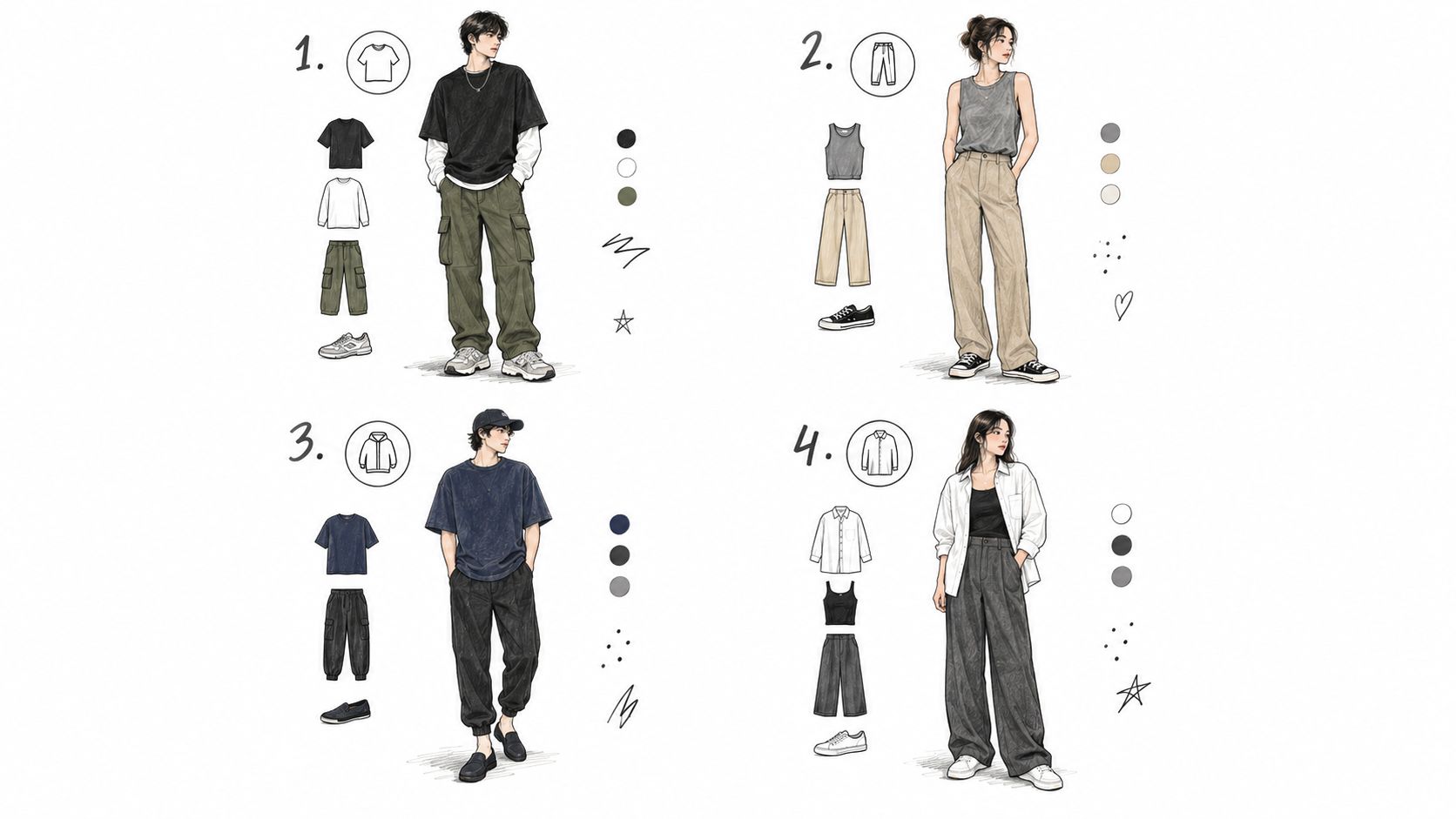
The simplest one is oversized tee + relaxed bottom + clean sneaker. Pair the 99/Unisex Pure Cotton T-Shirt with Essential Jogged Sweatpants when you want an easy daily uniform. The tee gives you a clean base, and the jogger keeps the outfit soft without losing shape.
A second formula is boxy tank + open overshirt + straight bottom. This works well when you want the outfit to breathe but still look finished. The tank gives a compact center line, the overshirt adds structure, and the bottom keeps the silhouette from getting too top-heavy.
A third formula is heavy tee + relaxed denim or pant + minimal footwear. This is the most useful option when you want the outfit to feel more grounded. Heavier fabric on top balances looser proportions on the bottom, which keeps the shape stable and stops the look from collapsing.
Picking the right formula
| Occasion and Weather | Formula | Key Fit Tip |
|---|---|---|
| Warm day, errands, casual meetups | Oversized tee + relaxed joggers | Keep the tee loose, but not so long that it swallows the body |
| Mild weather, layered daily wear | Boxy tank + open overshirt + straight pants | Let the inner layer stay shorter so the outfit doesn't feel bulky |
| Cooler day, more structure wanted | Heavy tee + relaxed denim or pants | Balance volume up top with cleaner lines below |
| Travel or long wear | Tee + joggers + light layer | Choose pieces with recovery so they still look neat later |
For sizing, unisex basics usually work best when you decide how much room you want before you order. If you like a square, roomy outline, choose the size that preserves shoulder width and body length. If you want a cleaner profile, size down only when the garment still leaves space through the chest and sleeves.
The internal logic matters more than gender labels. A unisex tee should feel wearable on its own, but also stable enough to layer, tuck, or half-tuck without turning awkward.
Here's a simple rule of thumb. If the top is oversized, the bottom should usually be more controlled. If the bottom is relaxed, the top should have cleaner structure. That push and pull is what keeps the outfit intentional.
A useful reference point is this unisex cotton T-shirt guide, because the same reasoning applies when you're choosing a tee that needs to work across bodies and settings.
The point of these formulas isn't to lock you into one uniform. It's to make getting dressed feel faster while still leaving room for climate, comfort, and personal preference.
Sourcing Sustainability and Shopping Smarter for Longevity
A minimalist streetwear piece earns its place through repeated wear, not a strong product photo. Before ordering, check the product page for GSM, cotton percentage, wash type, care instructions, construction details, and post-wash measurements. Fabric weight works like the frame of an outfit: it helps a tee keep its shape, while a lighter fabric may drape more softly.
Use one garment as a test before buying several colors. Wash one tee three times according to the care instructions, then check whether the collar recovers, the body twists, or the measurements change noticeably. If it still sits cleanly at the neck and hem, reordering becomes a more informed choice.
What to check on a product page
Measurements reveal how the garment may work on your body, especially when photos use a styled fit. Compare the listed chest, shoulder, sleeve, and body dimensions with a tee you already like. Clear construction notes and care guidance also show whether the maker expects the item to handle regular use.
A smaller assortment makes those checks more useful. Essentials are designed to work together, so one tee can move between joggers, shorts, overshirts, and outerwear without requiring another purchase for every outfit. The result resembles a capsule wardrobe, with fewer pieces covering more situations.
Why small assortments help
A tighter selection supports outfit repetition and makes unusual purchases easier to spot. Unisex basics and giftable pieces can fit into more wardrobes because they do not depend on one narrow styling niche. Their value comes from flexibility, fabric, and fit rather than novelty.
Online shoppers comparing products across regions also benefit from clear checkout information. A Shopify-powered cart with region and currency support for USD, GBP, and JMD makes purchasing more straightforward for customers in the US, UK, and Jamaica. Transparent pricing and detailed product pages reduce uncertainty when comparing essentials instead of chasing trend drops.
Buy for the next dozen wears, not the first photo.
That rule makes sustainability practical. Inspect the build, test how the fabric recovers, and choose garments that can anchor several outfits across seasons. A simple tee with dependable weight and fit can serve longer than a more exciting piece that only works once.
Building Your Minimalist Streetwear System That Lasts
A durable minimalist streetwear wardrobe follows a simple filter. Does the piece fit well, does the fabric support the shape, and can it work with what you already own? If the answer is yes to all three, it earns a place. If not, it's probably a trend purchase wearing minimal clothing as a disguise.
The easiest way to use that filter is to audit what you already wear most often. Keep the items that hold shape, sit clean on the body, and pair with at least a few other pieces. Then identify the gaps, maybe you need a better tee, a heavier top, a cleaner bottom, or one more layer that can move between outfits.
Minimalist streetwear isn't about looking stripped down. It's about choosing clothes that let the fabric, cut, and proportion do the styling for you. Once you understand that, the wardrobe gets much easier to build, and each new piece has a clearer job.
If you want unisex basics with a quiet, texture-first approach, 99 Collection offers tees, sweatpants, and tanks that fit this topic naturally. Visit 99 Collection to browse the current essentials, compare the Collections and All pages, and see which pieces can slot into your own fit-first wardrobe.