

Buying two or three sizes up is not a reliable way to get an oversized look. It usually gives you a wider torso, longer sleeves, and a hem that drags the eye downward, while the shoulders and armholes still fail to sit where they should. The right oversized T-shirt for a plus-size body is designed with proportion, not just extra circumference, in mind.
That distinction matters commercially as well as stylistically. The global plus-size clothing market was estimated at USD 119.4 billion in 2024 and is projected to rise from USD 125 billion in 2025 to USD 202.4 billion by 2034, with oversized T-shirts commonly grouped within tops and casual basics. Tops account for 33% of plus-size category sales, and oversized T-shirts are listed among the popular styles in that segment, according to Global Market Insights' plus-size clothing market analysis. This is not a niche silhouette. It's an everyday wardrobe category that deserves proper engineering.
Table of Contents
- Why Oversized Does Not Mean Size Up
- The Measurements That Actually Matter
- Choosing a Fabric That Works With Your Body
- Simple Alterations and Styling Fixes
- Three Outfits You Can Wear This Week
- Common Shopping Mistakes and Quick Fixes
- Your Plus-Size Oversized Tee Checklist
Why Oversized Does Not Mean Size Up
The most popular advice about oversized T-shirts is also the advice I'd stop giving first: “Just size up.” If your usual 2X T-shirt becomes a 3X, you may gain several inches across the chest, but you'll also inherit extra sleeve length, increased body length, and a shoulder line that can fall too far outward. The result often looks less like intentional streetwear and more like borrowed clothing.
A proper oversized cut distributes room across the garment. It controls the shoulder drop, sets the sleeve opening wide enough for movement, and balances the hem against the torso. You might wear your regular plus-size size in a deliberately oversized tee, or move up one size if the brand's base block runs close to the body. Going up multiple sizes should be the exception, not the styling plan.
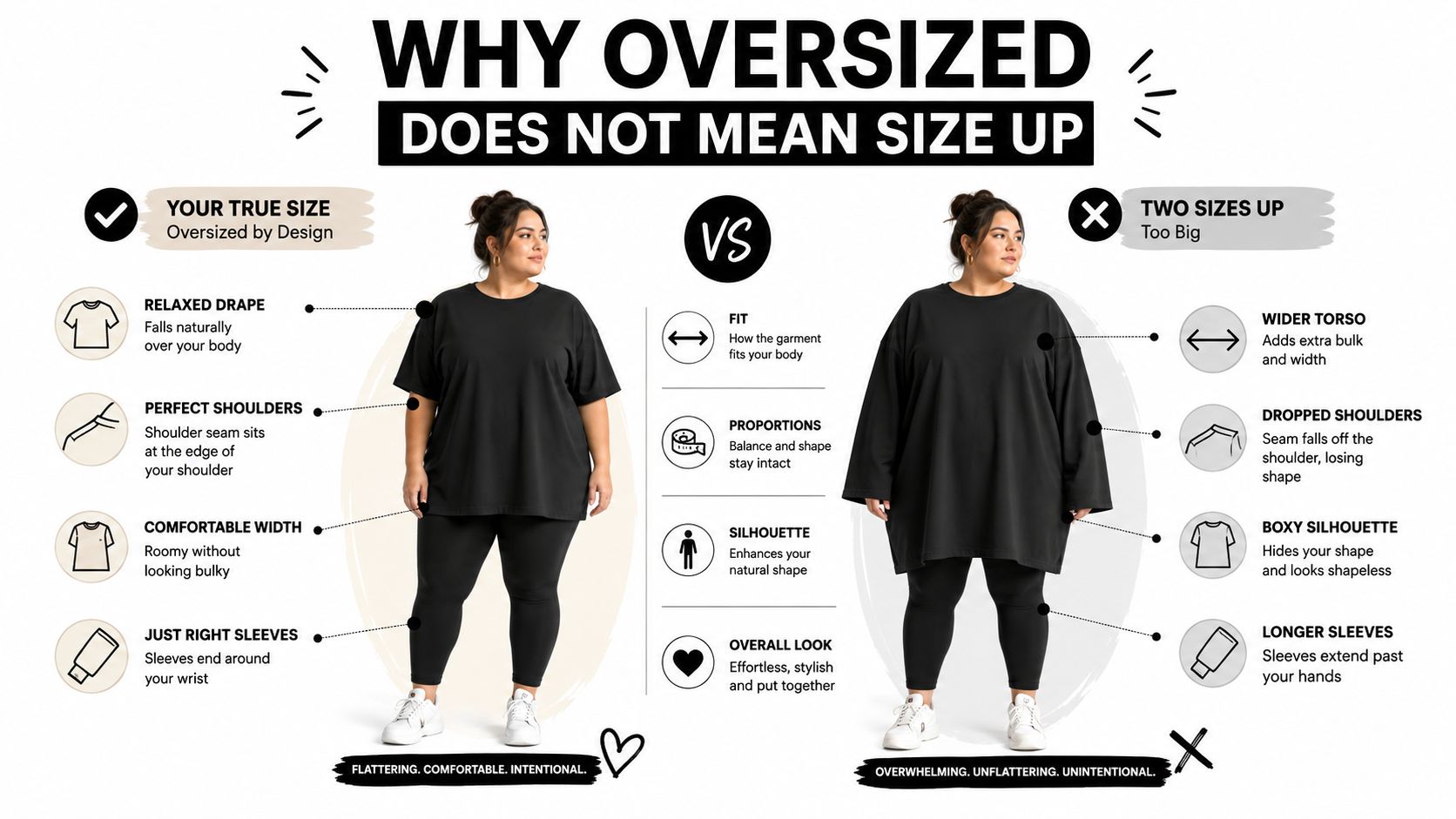
Read the silhouette, not the label
A label tells you how the brand categorizes the garment. It doesn't tell you where the shoulder seam will land or whether the sleeve will grip your upper arm. Brand sizing can vary sharply. An academic brand-sizing comparison found that 2XL chest measurements ranged from 1,000 mm to 1,310 mm, a 31% spread, which makes “I'll just buy my usual size” an unreliable strategy without garment measurements. The comparison appears in the academic plus-size apparel sizing research.
Start with four visual checks:
- Shoulder drop: The seam should fall beyond your natural shoulder, but not so far that the sleeve points downward and pulls the whole garment wide.
- Torso width: Extra room should create movement, not a tent that obscures every line from shoulder to hem.
- Sleeve opening: The cuff needs to clear the fullest part of your upper arm without creating a balloon shape.
- Length balance: A longer body can work, but it needs to end at a deliberate point, not at the widest part of the hip by accident.
Stylist's rule: Buy the cut that gives you the intended ease. Don't use a larger label to manufacture a shape the pattern never designed.
That's also why unisex clothing can work well when you inspect the actual measurements rather than assuming a men's or women's label solves fit. A gender-neutral clothing guide can help you think about the garment as a silhouette first, not a category first.
The Measurements That Actually Matter
A size chart is useful only when it shows garment dimensions you can compare with something already in your closet. Your best reference is a T-shirt that fits comfortably through the bust, upper arm, shoulder, and hips. Lay it flat, smooth the fabric without stretching it, and record the measurements in the same way each brand describes them.
Measure a tee you already trust
You need six measurements for an oversized plus-size T-shirt:
- Shoulder seam width: Measure from one shoulder seam to the other. This controls the visual width of the upper body and tells you how far the drop shoulder may extend.
- Chest circumference: Measure straight across the chest, then double that figure if the chart uses a flat measurement. Compare it with a tee that allows comfortable breathing and sitting.
- Sleeve length: Measure from the shoulder seam to the sleeve edge. A sleeve that reaches past the elbow can overwhelm the arm unless the body is proportionately longer.
- Sleeve opening: Measure the cuff straight across. This is critical for fuller upper arms because a generous body doesn't compensate for a tight or unstable sleeve.
- Center-back length: Measure from the highest shoulder point down to the hem. Length changes the apparent balance between torso and legs.
- Hem width: Measure straight across the bottom edge. A hem that is too narrow can cling at the hip, while one that is dramatically wider can create a square silhouette.
The Unisex Pure Cotton T-Shirt provides a useful example of why a chart needs more than a size label. Its listed measurements run from 27.56 to 30.71 inches in length, 21.14 to 23.86 inches in shoulder width, and 21.85 to 25.59 inches in flat chest width across sizes S through XXL. It's listed as 100% cotton, non-stretch, with a drop shoulder and loose fit, so you should assess the measurements rather than assume the fabric will accommodate extra ease.
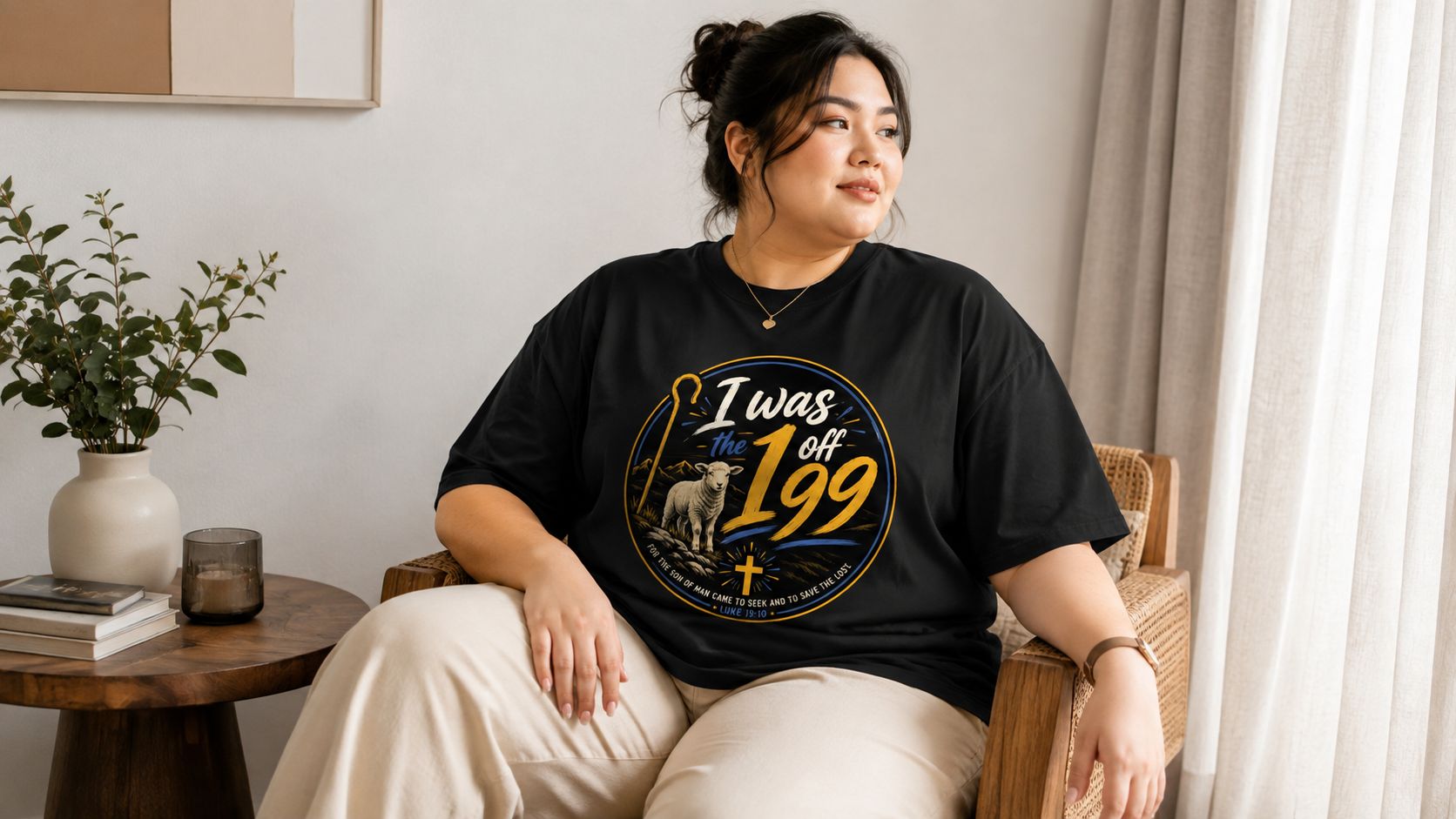
Use these checks in the fitting room
| Measurement | Target Range | Red Flag | Why It Matters |
|---|---|---|---|
| Shoulder seam | Slightly beyond the natural shoulder | Seam falls far down the upper arm | Excess drop can make the torso look wider than intended |
| Chest | Comfortable room without pulling or collapsing | Fabric strains at the bust or balloons excessively | Chest ease controls movement and drape |
| Sleeve length | Around the upper arm or near the elbow, depending on cut | Sleeve swallows the arm | Too much length can make the tee look heavy |
| Sleeve opening | Clears the fullest upper arm comfortably | Cuff grips or hangs like a funnel | Opening width controls friction and visual bulk |
| Torso length | Ends at a chosen styling point | Hem lands at an awkward hip or thigh point | Length changes the body's vertical balance |
| Hem width | Falls smoothly over the hip | Hem clings or flares sharply | The hem determines whether the tee skims or tents |
Before shopping online, note your bust, upper-arm, shoulder, preferred tee length, and fullest hip measurements. Then compare the garment's chest, shoulder, sleeve, and length specs. If a brand gives only “relaxed” or “oversized” without measurements, treat that as incomplete product information.
Fit failure is common enough to deserve this level of attention. Research on plus-size apparel identifies sizing and fit as frequent reasons for returns, and the academic evidence specifically points to the need to validate chest, shoulder, armhole, and length balance on real bodies rather than expanding a smaller block linearly.
Choosing a Fabric That Works With Your Body
Looseness cannot solve a fabric problem. A roomy T-shirt can still trap heat, cling beneath the bust, rub at the upper arm, or lose its shape by the middle of the day. Cotton Incorporated's sizing research found that plus-size shoppers look for stretch, breathability, and chafe resistance, with the survey reporting 72% for stretch, 69% for breathability, and 62% for chafe resistance in its 2024 sizing survey discussion. Fabric performance belongs in the fit conversation.
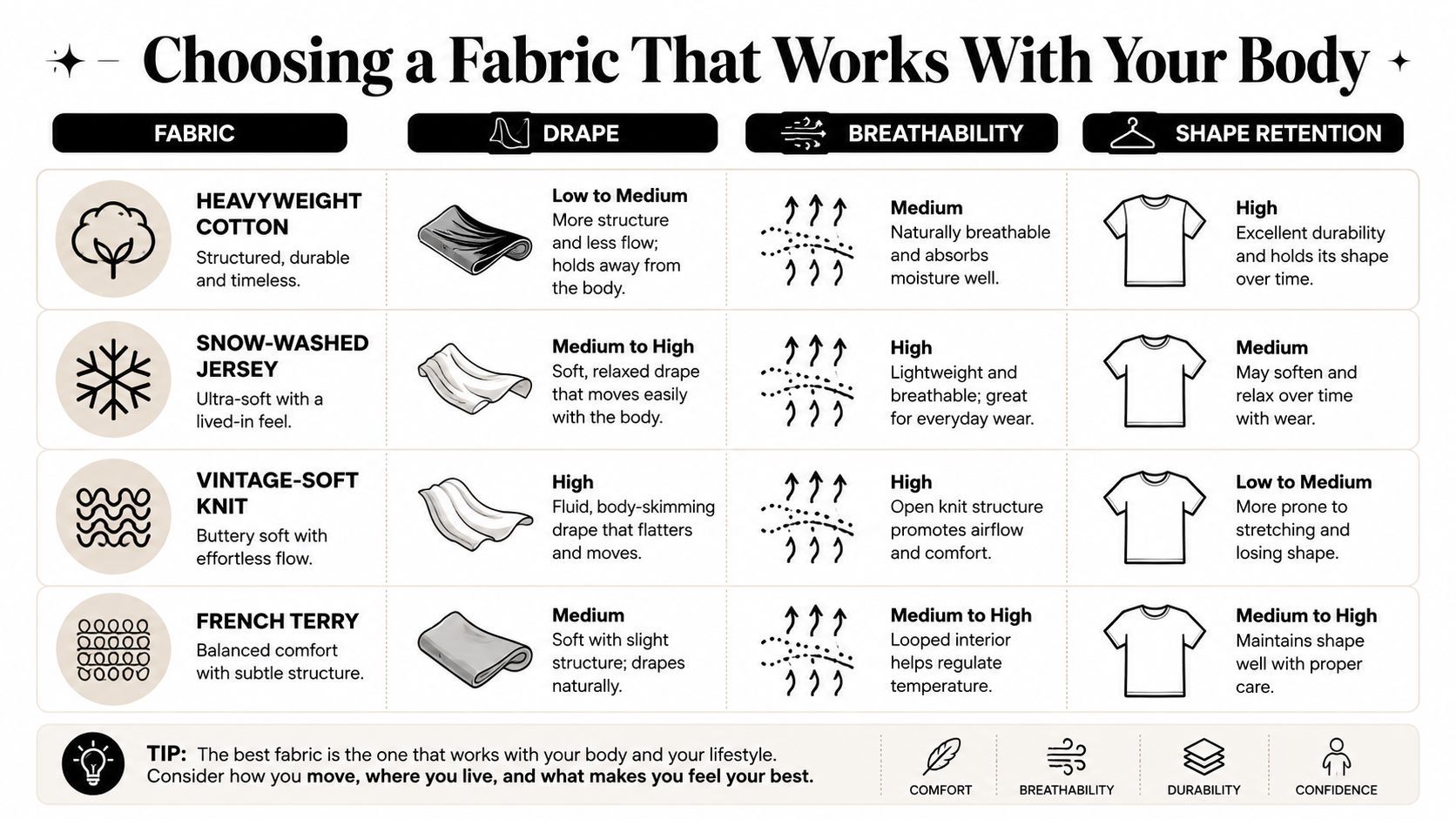
Four fabrics, four different outcomes
Heavyweight cotton gives the cleanest structure. It's useful when you want the shirt to skim over the stomach and hips instead of following every curve, but it can feel warm in humid weather and may hold odor if it dries slowly. Pair it with straight-leg denim or a fluid skirt so the outfit has somewhere to move below the structured top.
Snow-washed jersey usually offers a softer, lived-in surface and a relaxed visual character. Its success depends on the actual knit and finishing, so check whether the fabric recovers after stretching and whether the surface catches at friction points. Wear it with trousers or a crisp overshirt when you want the worn texture to feel intentional rather than sloppy.
Vintage-soft knit feels comfortable immediately, but softness isn't the same as durability. A very fluid knit may cling beneath the bust and arms or stretch out at the hem, especially if it lacks recovery. Use a front tuck or a cropped outer layer to give the outfit structure.
French terry is the strongest option when you want shape without a stiff handfeel. The looped interior can feel substantial and can skim rather than stick, though it may be too warm for high-heat days. It works with joggers, wide-leg pants, and short jackets because the fabric supports a clear silhouette.
The thick cotton T-shirt guide is useful if you're comparing structured cotton options, but don't choose weight by feel alone. Raise your arms, sit down, and check whether the hem twists or the fabric pulls across your upper body.
For hot weather, prioritize airflow, a smooth inner surface, and a sleeve opening that doesn't rub. For commuting or long days, choose recovery and opacity over an ultra-soft drape. For low-activity styling, heavier fabric can create a sharper line. Your body doesn't need the heaviest shirt. It needs a fabric whose behavior matches the day.
Simple Alterations and Styling Fixes
A good oversized T-shirt should feel comfortable before you style it. Styling tricks can refine proportion, but they shouldn't rescue a sleeve that cuts into your arm or a shoulder seam that falls halfway to your elbow. Once the base fit works, small adjustments can change the entire impression.
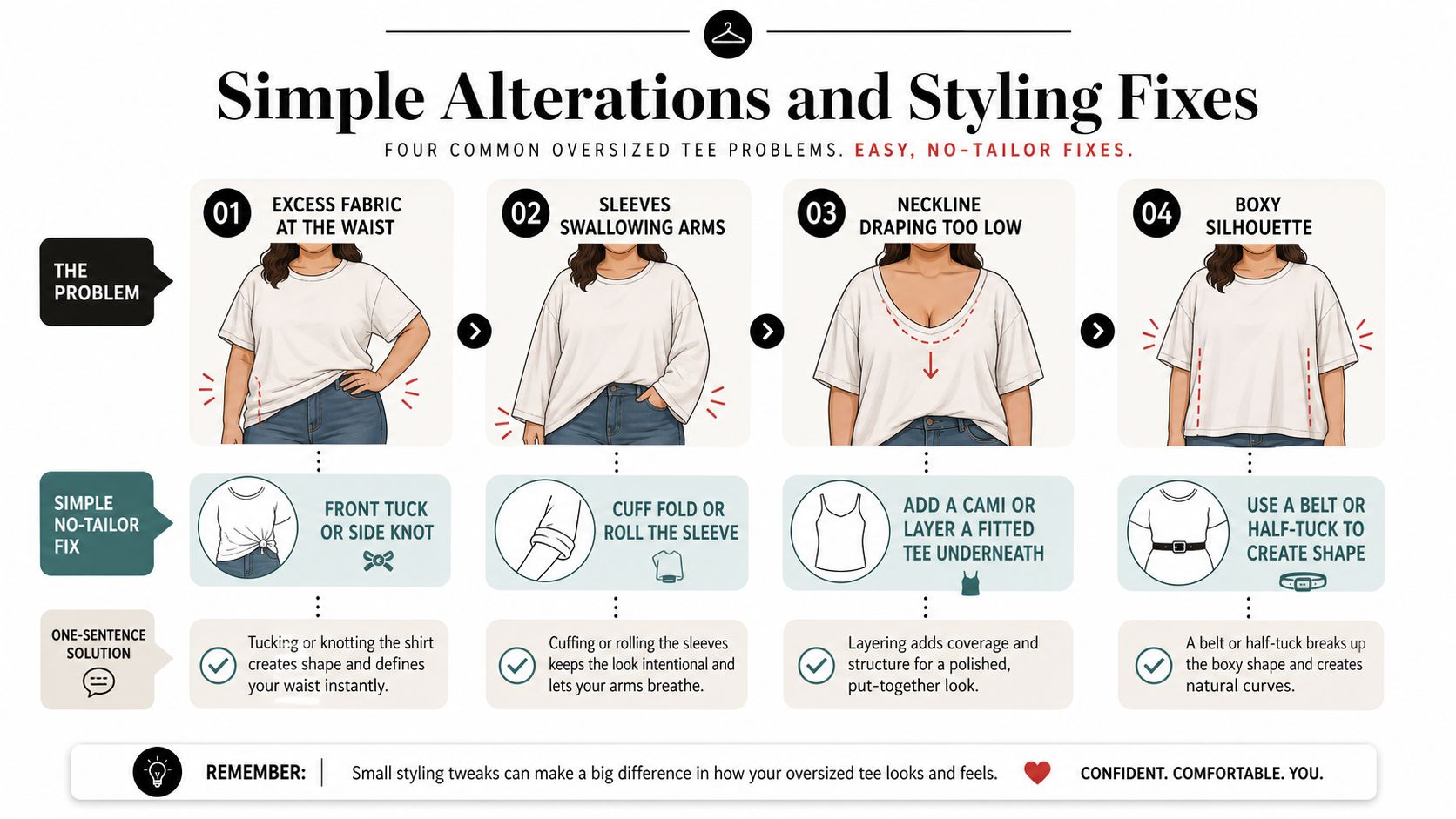
Fix excess fabric without adding bulk
If fabric pools at the waist, use a French tuck. Tuck only the center front into high-rise jeans or trousers, then let the sides fall naturally. This shortens the visual torso while preserving coverage across the hips.
A side knot works when the shirt has enough length to spare. Gather fabric at the narrowest point you want to emphasize, secure the knot with a small elastic, and fold the tail underneath. Don't knot directly over the fullest part of the stomach or hip, because the gathered fabric will add visual volume there.
For a more polished outfit, use a half-tuck with a belt. Tuck the front panel, place the belt over the trousers, and pull a little fabric back out so the shirt doesn't look tightly anchored. This creates a clear waist point without making the tee cling.
Control sleeves and neckline
Sleeves that swallow the arm need a military roll, not a loose cuff that unravels. Fold the sleeve edge upward once, then roll it again so the fold sits close to the upper arm. Keep the roll flat. A bulky cuff makes the arm look wider and can exaggerate a dropped shoulder.
If the neckline drapes too low, layer a fitted tank or a high-neck base underneath. A small safety pin placed inside the shoulder area can also control a shifting collar for a temporary outfit fix, but don't pin through a visible print or a delicate wash.
A hem that lands at the widest part of the hip often needs a styling adjustment rather than more width. A front tuck, side knot, or cropped jacket breaks the horizontal line. These moves shorten the apparent torso. If you want to lengthen the body visually, leave the tee untucked, choose a vertical outer layer, and keep the lower half in a similar tonal family.
Know when to visit a tailor
A tailor can refine a nearly right tee. Taking in the side seams by half an inch can remove excess width without destroying the intended shoulder shape, while shortening a curved hem by one to two inches can move it away from an awkward hip point. Those are useful alterations when the fabric, neckline, and shoulder already work.
Don't ask a tailor to turn a wrong size into a perfect garment. If the shoulder seam is far past the arm joint, the armhole is restrictive, or the shirt lacks enough room through the bust, return it and start with a better block.
Three Outfits You Can Wear This Week
The same oversized tee can look casual, or evening-ready. The difference comes from the relationship between the top's volume and the structure of everything around it.
Weekend coffee run
Start with a heavyweight bone-colored tee, high-rise straight-leg jeans, and white sneakers. Knot the shirt at your natural waist, using a small elastic underneath if the knot feels bulky. The knot should gather the excess fabric without tightening the bust or exposing more midriff than you want.
Keep the accessories simple. A low ponytail, compact crossbody bag, and small hoops support the relaxed shape without competing with it. The straight-leg jeans echo the tee's clean structure, while the lighter top keeps the outfit from feeling visually dense.
Transitional weather layering
Wear a snow-washed boxy tee beneath an unstructured blazer. Choose cropped wide-leg trousers to create a defined break at the ankle, then add loafers and a thin chain that draws attention toward the neckline.
The blazer should skim over the shoulders rather than fight the dropped seam. Leave the tee untucked if its hem finishes above the widest point of the hip. If it runs longer, use a soft front tuck so the blazer remains the third piece, not a cover for excess fabric.
For a more relaxed lower half, an everyday jogger can work, but pay attention to balance. The best jogger sweatpants guide is relevant when you're pairing casual bottoms with a wide tee. Keep one element polished, such as the loafers or blazer, so the outfit reads deliberate.
Evening with contrast
Choose a vintage black tee and tuck it into a bias-cut midi skirt. Add a cropped leather jacket and a pointed mule. The soft diagonal movement of the skirt offsets the tee's horizontal volume, while the cropped jacket creates a clear waist area without requiring a tight top.
Use a full tuck only if the shirt is thin enough to lie flat. With heavier cotton, a front tuck may look cleaner and prevent bunching beneath the jacket. Keep the jewelry vertical or close to the face, such as a pendant or slim drop earrings, to extend the line upward.
The principle behind all three outfits is simple: one piece supplies volume, and another supplies direction. Straight denim gives the first outfit clean length, sharp layers define the second, and a bias skirt plus pointed shoe gives the third movement.
Common Shopping Mistakes and Quick Fixes
Most oversized tee failures happen before the shirt reaches your closet. Shoppers respond to an inconsistent size label by adding more size, then discover that the garment has become too long and too wide in the wrong places.
| Common Mistake | Why It Fails on Plus Sizes | Quick Fix |
|---|---|---|
| Buying multiple sizes up because a brand runs small | The torso, sleeves, and hem expand together, even when only the chest needs more room | Compare garment measurements and start with a true oversized cut |
| Ignoring sleeve opening width | A roomy body can still create pressure or a balloon shape around the upper arm | Measure the cuff on a tee that already feels comfortable |
| Choosing very lightweight jersey for maximum softness | Fluid fabric can cling under the bust and arms or lose its hem shape | Choose a fabric with recovery and enough structure to skim |
| Trusting “relaxed” without checking length | Relaxed can mean wider, longer, or both | Check center-back length and hem position before ordering |
| Judging fit while standing only | The tee may look fine on a hanger but pull when you sit or reach | Test seated comfort, arm movement, and shoulder mobility |
Fit and sizing are major drivers of fashion returns. Industry returns syntheses place online apparel returns around 20% to 30%, with fit and size issues responsible for about 52% to 58% of returns in one fashion returns analysis. Another published returns report says sizing and fit can account for up to 65% of fashion returns, so measurement clarity isn't a minor convenience.
A label can tell you what the brand calls the shirt. The spec sheet tells you whether your body can live in it.
Don't rely on a generic fit tool that asks for a single size and produces a confident answer. Publish or request chest, shoulder, sleeve opening, and length measurements, then compare them with a proven garment. If the brand won't provide those details, your safest fix is to shop elsewhere.
Your Plus-Size Oversized Tee Checklist
Use this list in front of a mirror, in a fitting room, or while reading a product page. You don't need to memorize every fashion term. You need to know which parts control comfort and which parts control proportion.
Fit checkpoints
- Shoulder drop: The seam should extend beyond your shoulder without falling excessively down the arm.
- Sleeve opening: Your upper arm should move freely, with no gripping and no dramatic funnel shape.
- Torso width: The body should have room for sitting, reaching, and breathing without turning into a rectangle.
- Hem line: Decide where you want the shirt to end before you judge the size.
Action: Take a side photo or turn sideways in the mirror. Check the shoulder, sleeve, and hem as one connected line.
Fabric feel cues
- Weight: Choose structure when you want skimming, and lighter fabric when airflow matters more.
- Recovery: Stretch the hem gently and see whether it returns rather than staying rippled.
- Opacity: Raise your arms and check the fabric under real light.
- Friction: Move your arms across your body to test rubbing beneath the sleeves and bust.
Action: Test the fabric while moving, not only while standing still.
Styling defaults
- Front tuck: Use it to shorten a long torso visually and reveal the rise of your trousers.
- Half-tuck: Choose it when you want structure without exposing the full hip line.
- French tuck: Let the sides fall free for coverage while creating a controlled center.
- Single knot: Place it at the narrowest point you want to define, never automatically at the fullest point.
Action: Try the tee untucked first, then choose the smallest adjustment that improves balance.
Shopping red flags
- Deep V-neck: It may pull open or create unwanted length through the chest.
- Unclear side seams: A side seam that twists forward can signal poor proportion or insufficient room.
- Vague fit language: “Relaxed” and “oversized” don't replace garment measurements.
- One-size-up advice: Treat it as a starting clue, not a rule.
The best oversized T-shirts for plus-size shoppers are deliberate garments, not accidental results of oversized labels. Look for catalog pieces that state their measurements, fabric composition, shoulder construction, and care instructions, then compare those details with the tee you already trust.
99 Collection offers unisex casual staples, including cotton T-shirts with loose or drop-shoulder details that can be evaluated through their listed garment measurements. Visit 99 Collection to compare the catalog with this proportion-first checklist and choose an oversized tee based on fit, fabric, and styling potential rather than guesswork.