

You're standing in front of your wardrobe, ready to wear something more interesting than black or grey, but the red joggers keep pulling you back. They look great on the hanger, yet the question remains: how do you make such a vivid casual piece feel intentional rather than loud?
The answer isn't to treat red jogger sweatpants like a difficult trend. Treat them as the focal point of a simple outfit. Keep the surrounding colors controlled, pay attention to proportion, and choose fabric and fit with the same care you'd give any everyday essential.
Table of Contents
- From Sportswear Staple to Style Statement
- Understanding the Power of Red in Your Wardrobe
- Mastering Color Pairings with Red Joggers
- Building Complete Outfits from Top to Bottom
- Choosing the Right Red Joggers for Fit and Quality
- When and Where to Wear Your Red Joggers
- Embrace the Bold and Wear Them Your Way
From Sportswear Staple to Style Statement
The hesitation around red joggers often comes from their color, not their shape. The jogger silhouette already belongs to familiar territory: elastic cuffs, a comfortable waistband, and a relaxed profile that works across errands, travel, and downtime. Red makes that familiar foundation more apparent.
The category itself has a long practical history. According to the documented history of sweatpants, Émile Camuset, founder of Le Coq Sportif, introduced the first sweatpants in the 1920s as functional sportswear for athletes. Those early garments were simple knitted grey jersey trousers designed to support movement and warmth, and they were appearing at major sporting events such as the Olympics by the 1930s.
Practical rule: A bold color feels easier to wear when the garment underneath it has a familiar, functional shape.
Sweatpants later moved into casualwear during the 1960s and 1970s. They became more socially accepted outside sport during the 1980s, then developed into the tapered jogger silhouette that now sits comfortably inside contemporary casual and athleisure wardrobes. Red jogger sweatpants are therefore not a strange departure from the category. They're a color variation of a garment that has already moved from athletic utility into daily life.
That history changes the styling mindset. You don't need to build a costume around red joggers or make every other item equally expressive. Use the pants as the visual anchor, then let understated layers, clean footwear, and deliberate proportions make the outfit feel current.
Understanding the Power of Red in Your Wardrobe
Red attracts attention because it has visual weight. On joggers, that effect is amplified by the garment's generous surface area, so the shade and the surrounding colors matter more than they would on a small accessory.
A bright cherry red creates energy and reads as sporty or youthful. A deeper crimson feels richer and more grounded. Burgundy and wine tones behave almost like dark neutrals, especially when paired with black, charcoal, cream, or brown. Think of the shade as the volume control on the outfit. Brighter reds turn the volume up, while deeper reds make the same silhouette easier to integrate into a quiet wardrobe.
Start with the mood
Choose the red according to the impression you want to create:
- Bright red: Energetic, graphic, and streetwear-oriented. Balance it with clean neutrals and simple shoes.
- Muted red: Relaxed and lived-in. Pair it with washed denim, faded black, or soft beige.
- Burgundy: Refined and understated. It works especially well with knitwear, leather, and dark outer layers.
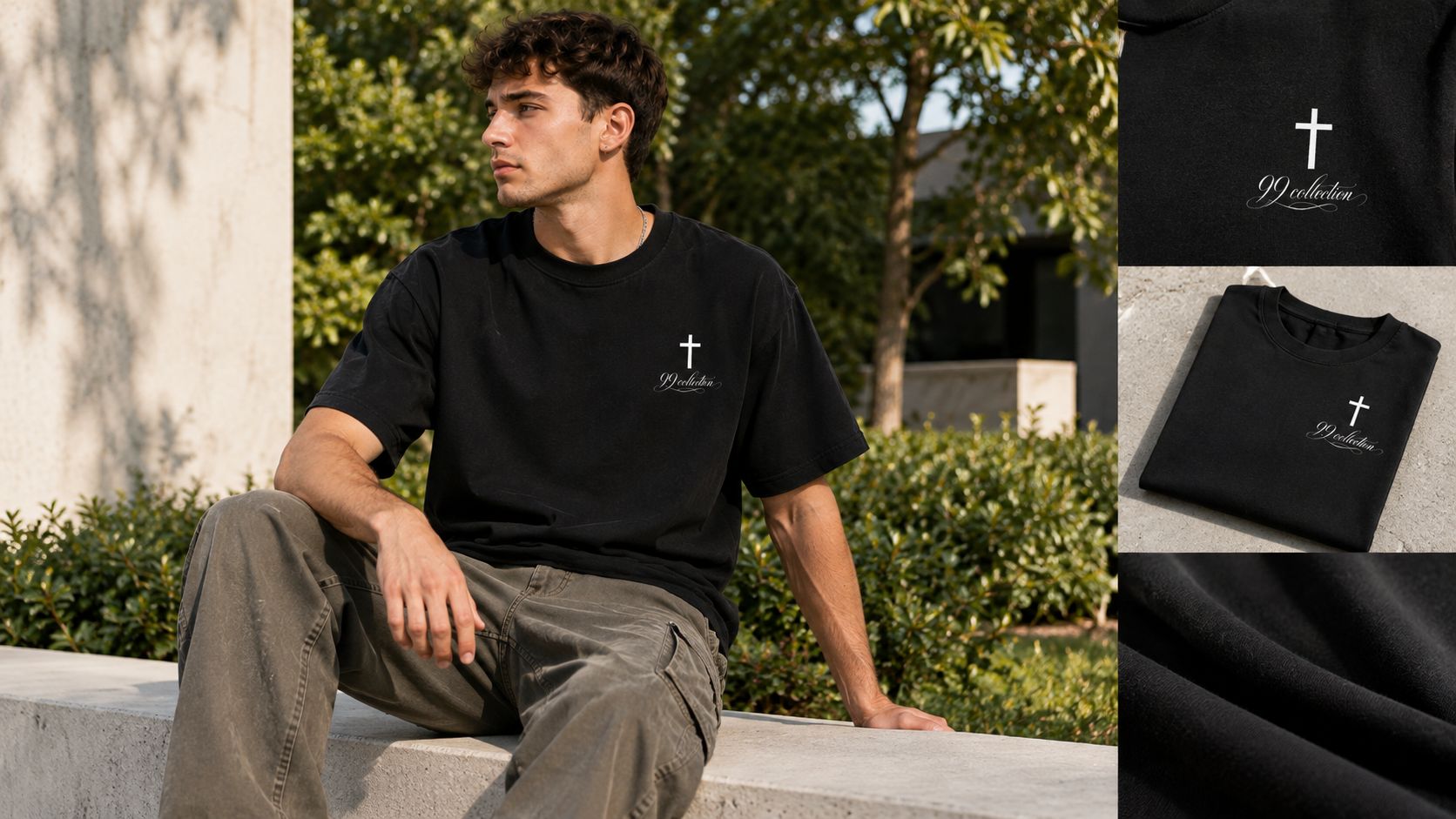
The top should support the shade rather than compete with it. A loose, unisex cotton tee such as the Unisex Pure Cotton T-Shirt offers a casual base, with a loose silhouette, drop shoulders, and a round neckline. Its listed construction is 100% cotton, non-stretch, and designed for casual, street, and daily wear.
Color temperature helps, too. Warm reds sit naturally beside cream, tan, rust, and orange. Cooler reds work smoothly with grey, blue, and crisp white. You don't need to follow a strict color wheel every time, but identifying whether your red feels warm, cool, bright, or dusty will make pairing much more intuitive.
Red works best when the rest of the outfit gives it room to speak.
Mastering Color Pairings with Red Joggers
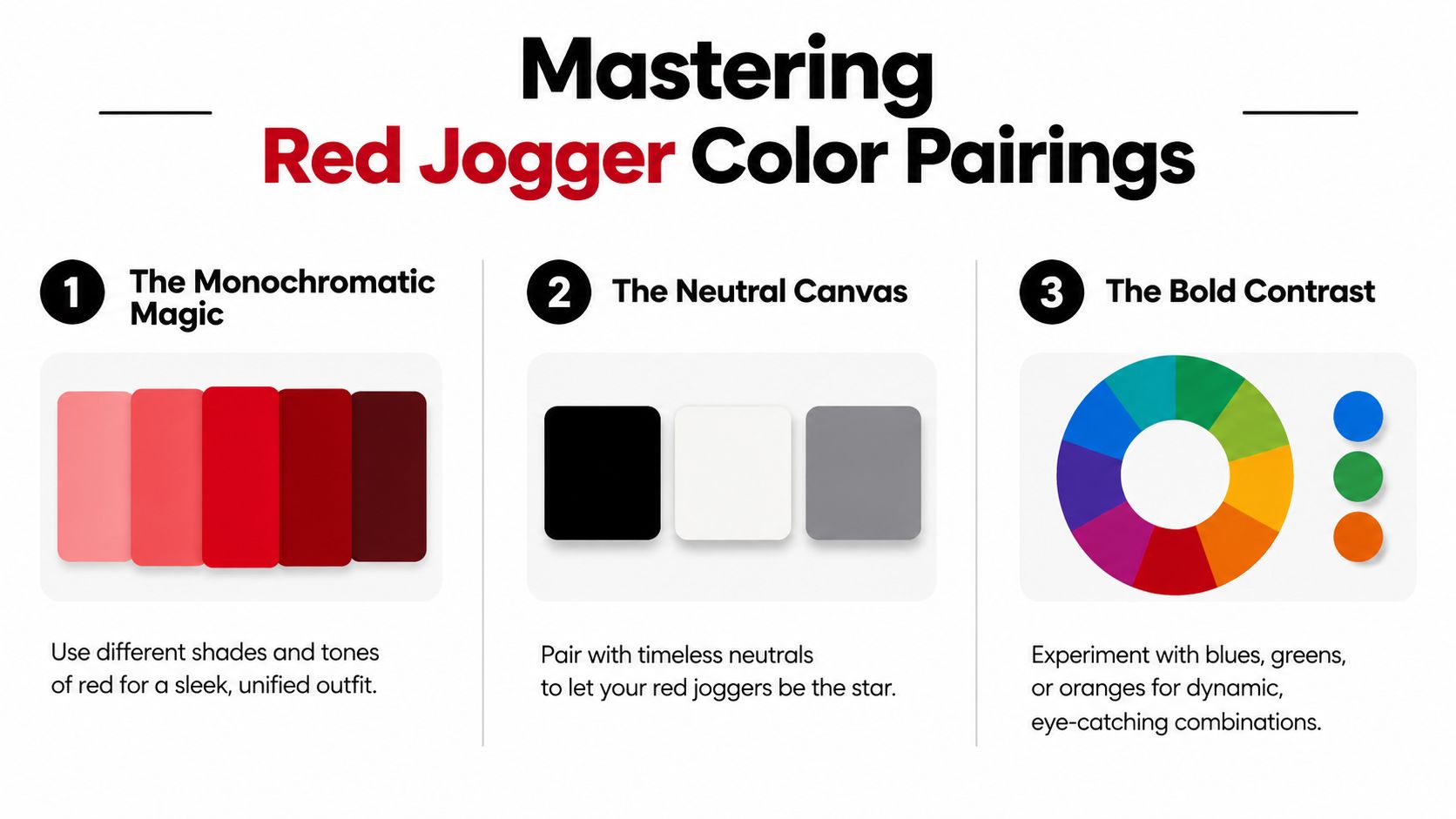
The most reliable way to style red joggers is to decide whether the outfit should feel grounded, harmonious, or deliberately contrasting. Each approach creates a different result, and none depends on adding more statement pieces.
Ground the look with neutrals
Black is the sharpest partner for red. It creates a strong, graphic contrast and gives the outfit a streetwear edge. Try a black hoodie, black overshirt, or black leather sneaker when the joggers are bright and saturated.
White does the opposite. It keeps the outfit fresh and high contrast without making it feel heavy. A white tee and clean trainers create a simple summer combination, while a white sweatshirt makes the red feel sporty but controlled.
Grey is softer than black and less stark than white. Light grey reduces the intensity of red, while charcoal gives you depth without the severity of an all-black outfit. Beige and cream introduce warmth, which is especially effective with brick, rust, or burgundy reds.
For a quieter wardrobe, the guide to black jogger sweatpants offers a useful comparison. Black joggers disappear into an outfit, while red joggers become the focal point, so the rest of the palette should usually be more restrained.
Build harmony with nearby colors
Analogous colors sit close to red and create a smooth, intentional transition. Orange and rust make red feel warmer and more expressive. Soft pink creates a tonal relationship that feels contemporary rather than clashing, particularly when one shade is muted.
Keep the values different. Bright red with bright orange can become visually busy, while a saturated red with dusty pink or muted rust feels more composed. Texture also helps separate the colors. A red fleece jogger with a washed pink tee has a softer result than the same palette in glossy technical fabrics.
Use contrast selectively
Green and blue create a stronger statement because they sit further from red in the visual spectrum. Olive green is the easiest entry point. It has enough earthiness to keep the outfit wearable, while still giving the red a dynamic counterpart.
Navy and denim blue offer a cleaner contrast. A denim jacket over a neutral tee introduces blue without turning the outfit into a full color-blocked look. For a more artistic result, use one additional color only, then keep the shoes and accessories neutral.
Color principle: If the palette is bold, simplify the silhouette. If the silhouette is oversized or layered, soften the palette.
Building Complete Outfits from Top to Bottom
A red jogger outfit succeeds when the proportions feel deliberate. The pants already create volume through the leg, so the top, outer layer, and shoes should either balance that volume or provide a clear contrast.
The effortless streetwear edit
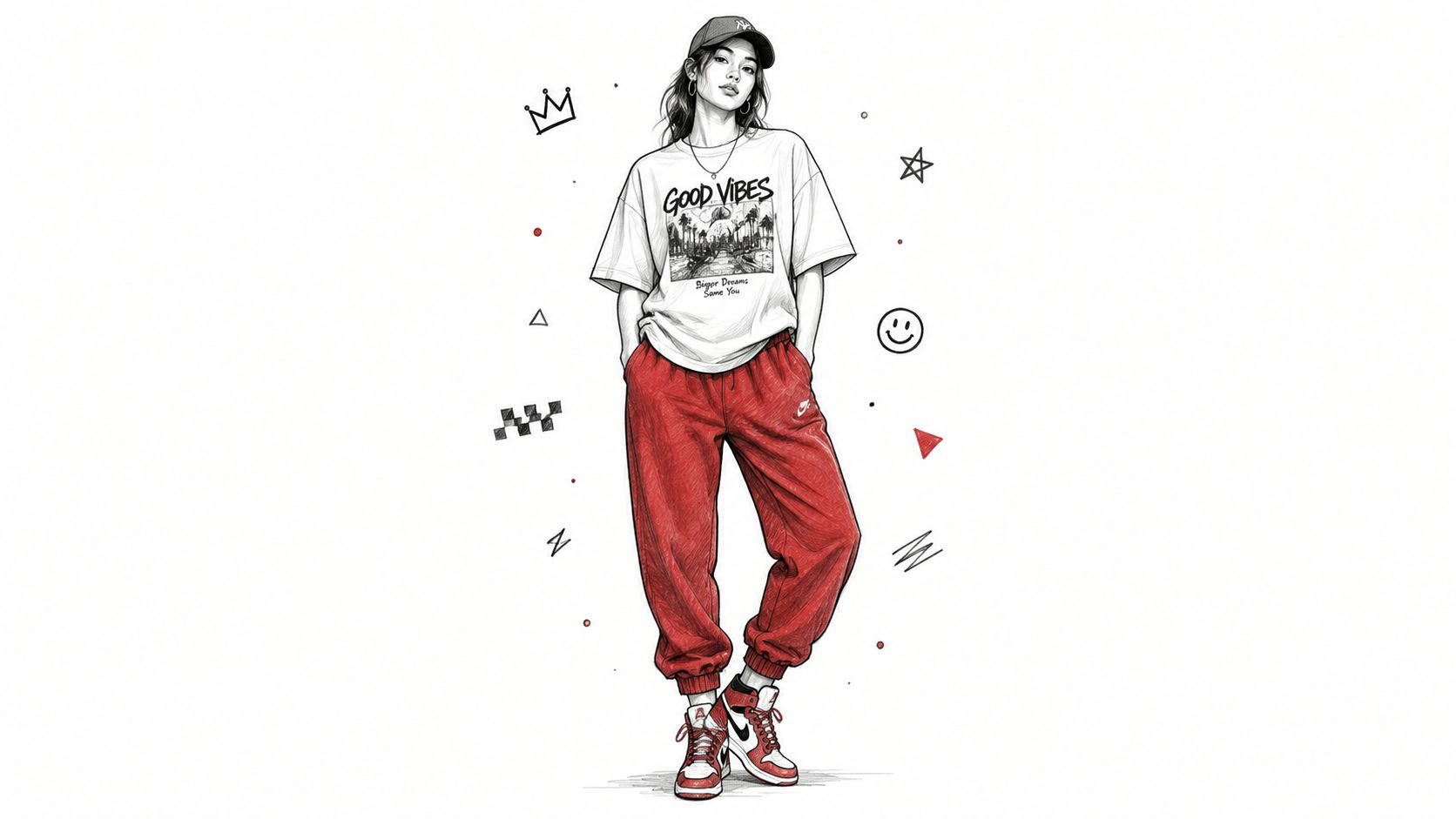
Start with an oversized vintage-wash tee in white, faded black, or soft grey. Let the hem fall naturally rather than tucking it tightly, because the relaxed top echoes the casual volume of the joggers. Add chunky sneakers in white, grey, or black to give the lower half enough visual structure.
A simple cap works well here, especially in a neutral shade. Keep jewelry minimal, perhaps a watch or a small chain, so the red remains the focal point. For more guidance on proportion, the guide to wearing an oversized T-shirt is a useful reference.
The elevated casual look
Use a fitted or lightly relaxed knit in cream, charcoal, or navy. The cleaner texture and closer fit create contrast against the sporty jogger fabric. Add a medium-wash denim jacket or an unstructured dark overshirt, then finish with clean leather sneakers.
The key is restraint. Avoid stacking loud graphics, bright footwear, and multiple accessories on top of the red. One polished element, such as smooth leather shoes or a structured jacket, is enough to move the outfit away from lounge-only territory.
The weekend comfort outfit
For a low-effort day, pair the joggers with a simple tank, relaxed tee, or tonal hoodie. A cream tank makes bright red feel lighter, while a charcoal hoodie gives burgundy joggers a deeper, more cohesive mood. Slides or understated trainers keep the outfit practical.
If the hoodie is oversized, check the hem and sleeve volume. The outfit should look relaxed, not swallowed. A clean cuff, visible ankle, or slightly structured shoe can restore definition.
The tonal statement
A more advanced option is to wear different shades of red together. Pair bright red joggers with a faded red tee, or burgundy joggers with a wine-colored sweatshirt. Break up the tonal effect with cream sneakers, a black bag, or a neutral jacket.
The result feels considered because the color repeats without becoming identical. This is the easiest way to make red look like a complete palette rather than a single isolated item.
Choosing the Right Red Joggers for Fit and Quality
Styling can't compensate for a poor fit or unstable color. Before buying red jogger sweatpants, inspect the fabric, waistband, cuff, pockets, and size chart. These details determine whether the piece feels like a useful everyday basic or an item you avoid after a few wears.
Fabric choice sets the performance profile. Technical fleece joggers are commonly made with polyester-rich fabrics because polyester supports breathability and moisture management, while sweat-wicking constructions move moisture away from the body. Cotton-dominant joggers generally feel softer and more natural, but their wash and perspiration resistance depends more heavily on the dye system. The technical fleece jogger reference illustrates why polyester-led constructions suit active, quick-drying use, while cotton-led fabrics make more sense for relaxed lifestyle wear.
Match the fabric to the day
| Priority | More suitable direction | Why |
|---|---|---|
| Movement and quicker drying | Polyester-led construction | Moisture management and drying performance take priority |
| Soft everyday wear | Cotton-dominant construction | The hand feel is more natural and comfortable |
| A balanced wardrobe basic | A considered blend | It can combine softness with practical durability, depending on the fabric and finish |
Unisex sizing needs more attention than the label suggests. Brand charts don't map cleanly across one another, and the same nominal size can produce a different waist, hip, or inseam result. Measure a pair of joggers you already like, then compare those garment measurements with the seller's chart instead of relying on your usual size.
Choose the silhouette deliberately
- Slim taper: Select a closer fit through the thigh and a narrower cuff. This works with low-profile trainers and shorter jackets.
- Relaxed streetwear: Allow more room through the seat and leg, then balance the shape with an oversized tee or cropped outer layer.
- Uncertain between sizes: Consider the intended drape first. Sizing up can create a softer, more relaxed shape, while sizing down may produce a sharper taper, but only if the waistband and thigh remain comfortable.
Color quality deserves its own inspection. The AATCC TM61 laundering method is an accelerated test designed to approximate about five typical home or hand wash cycles in roughly 45 minutes. For red garments, laundering fastness matters because weak dye retention can lead to quicker shade loss, dulling, or transfer onto lighter clothing.
Buying check: Ask whether the brand validates red color stability through laundering and rubbing tests, not just whether the sample looks vivid on day one.
A quality red jogger should also have a comfortable waistband, secure pocket construction, and cuffs that hold their shape. Review care instructions before purchasing, especially if the fabric has a pigment-dyed or heavily washed appearance. For a broader everyday-jogger reference, see how to choose the best jogger sweatpants.
When and Where to Wear Your Red Joggers
Red joggers aren't limited to the sofa or the gym. Their versatility comes from the jogger shape, while the color gives familiar settings a sharper point of view. The trick is to adjust the supporting pieces to match the context.
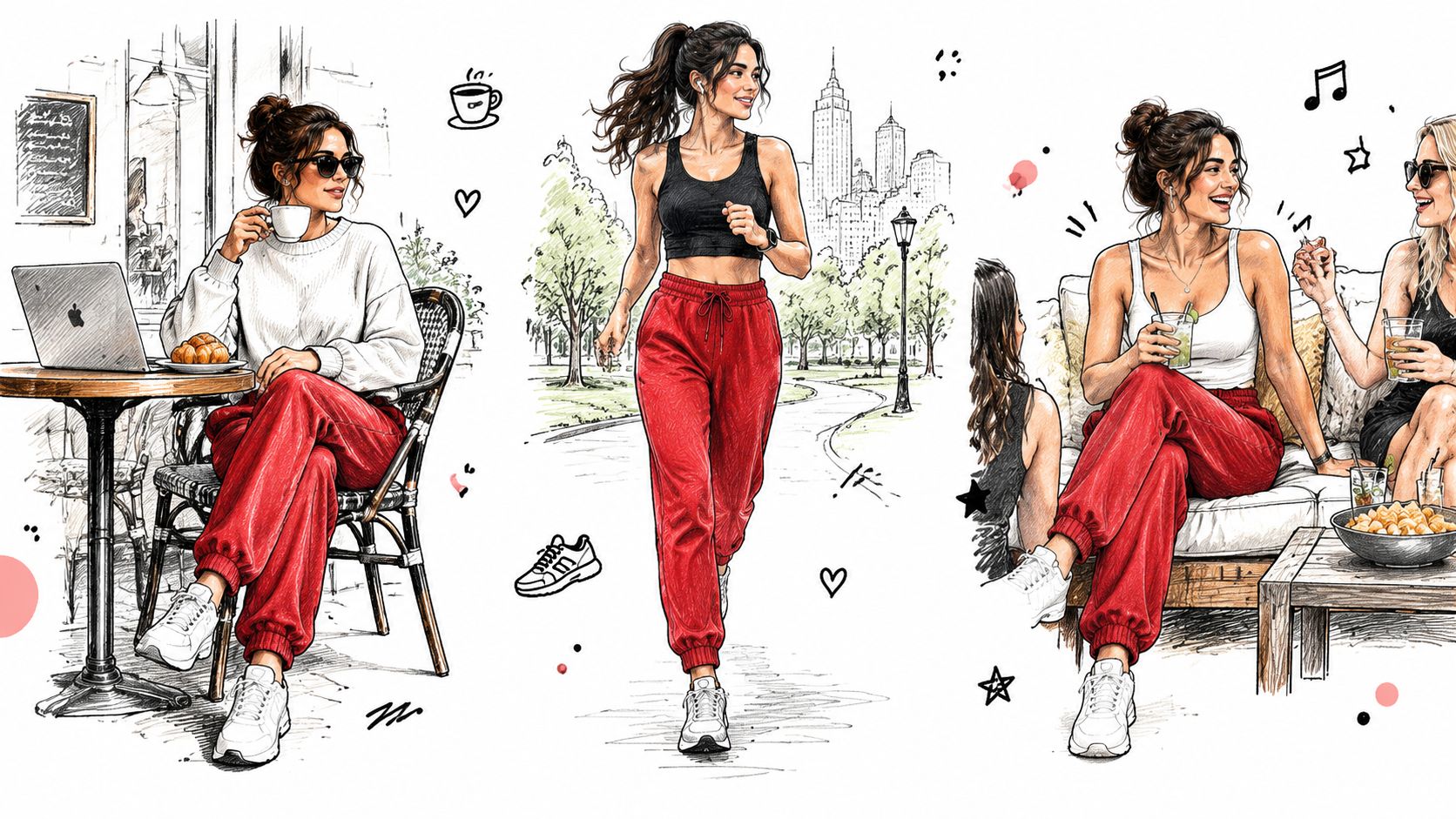
For travel days, use a neutral sweatshirt, lightweight jacket, and practical trainers. Red makes the outfit easy to identify without requiring elaborate styling, while the jogger construction keeps the look comfortable for long periods of sitting and walking. A dark tote or crossbody bag adds structure.
Creative workplaces and informal studios can accommodate a bolder casual piece when the rest of the outfit looks neat. Choose a solid knit, clean overshirt, and minimal sneakers. Avoid visibly worn cuffs, loud competing graphics, or overly slouchy layers if the setting expects a more polished appearance.
Coffee runs and weekend errands are the easiest environment. Pair the joggers with a white tee, denim jacket, and simple trainers, or use a hoodie and slides for a more relaxed finish. The outfit looks intentional when the shoes are clean and the top layer fits well.
For casual social gatherings, deepen the palette. Burgundy joggers with a black knit and leather sneakers feel more composed than bright red with multiple sporty pieces. Red isn't the problem in these settings. Unbalanced styling is.
Embrace the Bold and Wear Them Your Way
Red jogger sweatpants work because they combine a familiar silhouette with a stronger visual identity. The category began as functional sportswear, evolved into casualwear, and now supports everything from relaxed basics to deliberate streetwear. The color adds personality, but the outfit stays wearable when you control the palette and proportions.
Start with neutrals if you're hesitant. Move toward tonal reds when you want a quieter statement, then experiment with olive, navy, denim, rust, or soft pink once the foundation feels natural. Choose fabric according to use, check the garment measurements rather than trusting a generic unisex label, and treat dye stability as part of quality.
The category has substantial commercial relevance. The global joggers and sweatpants market was estimated at about USD 6.33 billion in 2024 and is projected to reach USD 10.2 billion by 2035, according to industry market coverage. That scale reflects how far the garment has moved beyond sport, but your outfit doesn't need to follow a trend cycle. It only needs a clear point of view.
Browse 99 Collection for contemporary unisex staples, including cotton T-shirts and everyday sweatpants that can support a bold red jogger look. Choose a simple base layer, build around the color, and make the outfit your own.