

You pick up a T-shirt expecting a substantial everyday layer, then notice the fabric is translucent under ordinary light. After one wash, the collar loosens, the body twists, and the “premium heavyweight” label starts to feel meaningless. The problem usually isn't your judgment. It's that apparel labels often describe the shirt with marketing language instead of a measurable fabric specification.
For men shopping for thick cotton T-shirts, GSM, construction, fit, shrinkage, and care instructions tell you far more than words such as “premium” or “heavyweight.” Once you understand those details, you can choose a soft, breathable tee for warm weather, a structured layer for streetwear, or a dense oversized shirt that holds its silhouette without guessing.
Table of Contents
- Why Fabric Weight Matters More Than Marketing Labels
- Decoding GSM and Ounce Benchmarks for Heavyweight Tees
- Navigating Sizing and Shrinkage in Dense Cotton
- Care Protocols to Preserve Structure and Vintage Finishes
- Styling Heavyweight Cotton for Modern Streetwear and Layering
- Building a Wardrobe with Intentional and Mindful Basics
Why Fabric Weight Matters More Than Marketing Labels
Two cotton tees can look similar online while behaving very differently on the body. One may cling, show light through the chest, and lose its shoulder line. The other may feel firm, remain opaque, and support a clean silhouette. “Premium” and “heavyweight” do not explain that difference.
For men shopping for thick cotton T-shirts, fabric weight gives you a measurable starting point. Standard cotton tees generally sit around 150–180 GSM. Premium or heavyweight versions often begin around 180–200 GSM, with some winter, workwear, or streetwear garments reaching 200–300 GSM, as outlined in this fabric GSM calculator guide. GSM means grams per square meter, so it describes the mass of the fabric over a standard area rather than a brand's preferred adjective.
That measurement is useful because “heavyweight” has no universal definition. One supplier may apply it to a shirt near the lower end of the range, while another may reserve it for dense cotton intended for an oversized shape. Comparing GSM lets you judge products from different suppliers and regions on the same textile basis.
What a better product page should show
Check several specifications together:
- Fabric weight: A GSM figure or ounces per square yard provides a measurable thickness reference.
- Fiber content: “100% cotton” identifies the main fiber, but not the knit, finishing, or recovery.
- Shrinkage treatment: Pre-shrunk or compacted fabric indicates that dimensional change has been addressed.
- Finished measurements: Chest, shoulder, sleeve, and body length show how the tee should fit.
- Care instructions: Washing temperature and drying guidance affect whether the original shape remains stable.
Practical rule: Read “premium” as a description of intent, not proof of performance. Ask for GSM, fiber content, measurements, and shrinkage information before trusting the label.
Climate and styling should guide the choice. A lower heavyweight range can add opacity and structure without feeling excessively warm. Denser cotton suits cooler weather, workwear, or a streetwear silhouette that needs the body to stand away from the torso.
Construction then determines how well that weight performs. A firm fabric cannot rescue a loose collar rib or twisting side seam. Check whether the collar rib looks proportionate to the body and lies flat around the neck. A wider, well-supported rib usually signals that the maker designed the neckline to carry the shirt's added weight, rather than using thicker fabric.
Decoding GSM and Ounce Benchmarks for Heavyweight Tees
GSM, or grams per square meter, measures fabric mass over a standardized area. A higher figure generally means more material in the jersey, which can bring greater opacity, more body, and better shape retention. GSM describes the fabric's starting weight, though it cannot confirm cotton quality, sewing accuracy, or finishing quality by itself.
Ounces per square yard describe the same general property through another sourcing system. A standard textile conversion places 200 GSM at about 5.9 oz/yd², a level often treated as the point where a cotton tee begins to feel noticeably substantial. At that weight, the shirt will usually look less transparent, feel denser in the hand, and resist collapsing during normal wear more effectively than a lighter jersey.
The useful weight spectrum
| Weight Category | GSM Range | Characteristics & Best Use |
|---|---|---|
| Lightweight | 130–150 GSM | Soft, airy, and suitable for hot conditions or an underlayer |
| Standard | 150–180 GSM | Familiar everyday jersey with easier drape and lighter layering |
| Heavyweight entry | 180–200 GSM | More body, improved opacity, and a stronger collar presence |
| Heavyweight | 200–220 GSM or higher | Structured feel, clearer silhouette, and good standalone wear |
| Premium heavyweight | 254–300 GSM | Dense hand feel, pronounced shape, and a streetwear or winter-oriented look |
These bands are summarized from industry guidance on heavyweight T-shirt construction and the broader overview of typical T-shirt weights. The boundaries are flexible, but the ranges connect a specification with likely wear characteristics.
Match fabric weight to the way you dress
A 150–180 GSM tee usually drapes softly and layers easily beneath a shirt or lightweight jacket. It suits warm conditions, although it may provide less opacity and less visual structure than denser jersey.
At around 200 GSM, the shirt becomes more substantial as a standalone garment without necessarily feeling rigid or excessively warm. This range can suit everyday wear, branded merchandise, and refined basics when you want more coverage without a winter-weight feel.
At 254–300 GSM, the fabric becomes far more assertive. It can support a boxy or oversized cut, create a stable shoulder line, and add visual weight to simple trousers or denim. The trade-off is reduced drape. As GSM increases, the tee generally hangs less fluidly and can feel warmer or bulkier under additional layers.
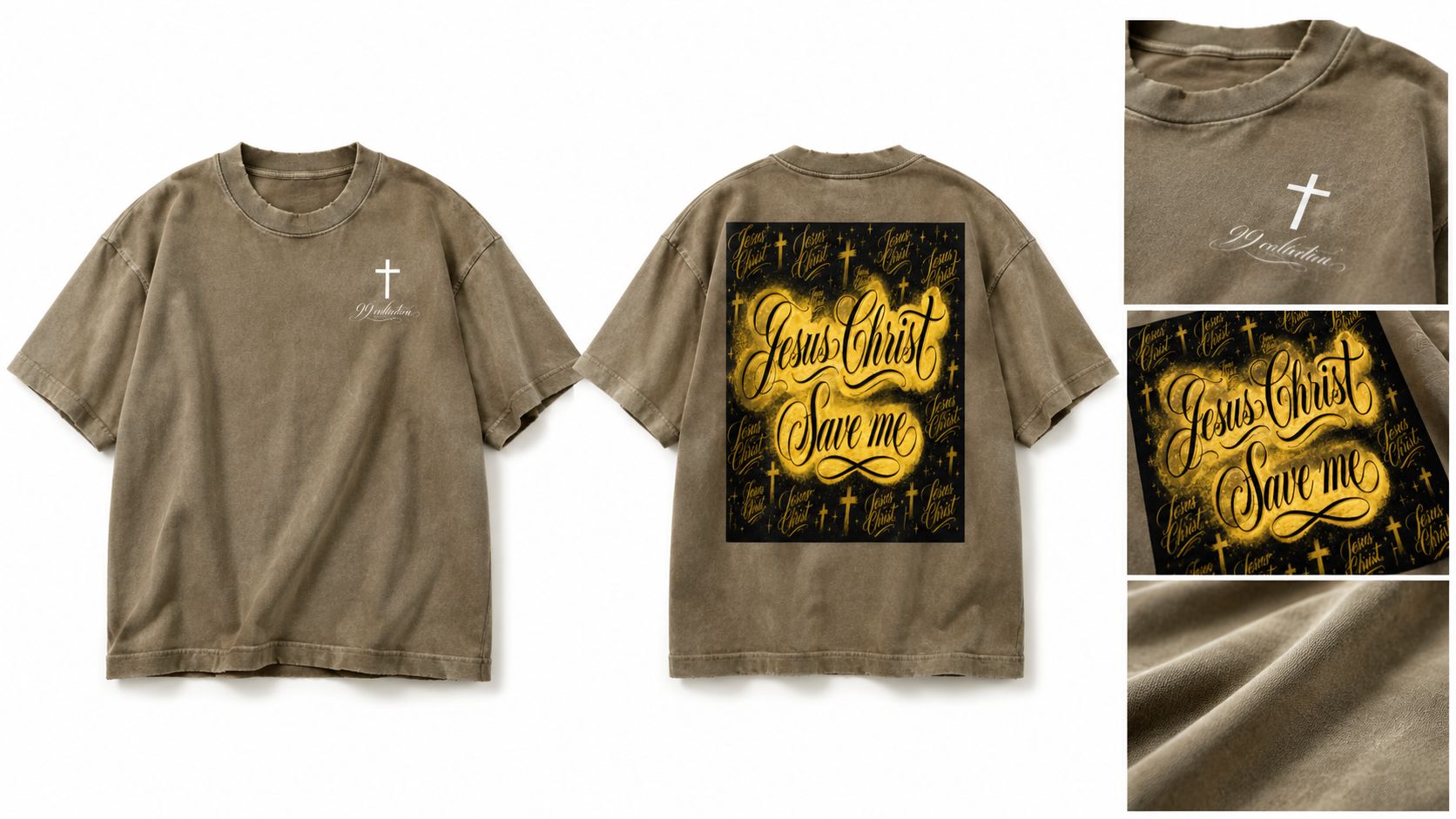
One catalog example sits well above ordinary heavyweight territory. The Heavyweight Vintage Washed Frayed T-Shirt is listed as 100% cotton at 430 g/m², or 12.7 oz/yd², with a thick fabric description, loose drop-shoulder cut, vintage wash, and frayed detailing. Its listed measurements run from 71 to 81 cm in length and 56 to 66 cm in chest width across sizes. Those proportions matter as much as the fabric weight, because dense jersey in a relaxed cut will wear differently from the same weight in a closer silhouette.
For buyers, the practical choice depends on climate and styling. A lower heavyweight range can add opacity and structure without excessive warmth. Denser cotton fits cooler weather, workwear, or streetwear outfits that need the shirt to stand away from the torso.
Use GSM as your first screening criterion, then evaluate cotton quality, knit density, finishing, collar construction, and the intended silhouette. A higher number gives more structure, not a guarantee that the tee will feel cooler, softer, or better made.
Navigating Sizing and Shrinkage in Dense Cotton
Heavy cotton changes the way you should choose a size. With a light jersey, a little movement in the fabric may disappear into the drape. Dense cotton exposes fit decisions more clearly. If the body is too short, the shirt can look cropped after washing. If the shoulders are too wide, the heavier material may emphasize the drop instead of creating a relaxed silhouette.
Pure cotton also has limited elastic recovery compared with fibers or blends designed to bounce back. The guidance in this fabric specification guide places residual shrinkage for pre-shrunk cotton around 3–5%, while untreated cotton can reach 5–10%. It also notes that 230–300 GSM jersey is particularly vulnerable to growth at elbows and knees and to lengthwise distortion when manufacturers don't control finishing.
Read the spec sheet in this order
- Start with finished measurements. Compare the garment's chest, shoulder, sleeve, and body length with a T-shirt you already like. Don't rely only on the size letter.
- Check whether the fabric is pre-shrunk or compacted. This won't eliminate every dimensional change, but it gives you more confidence than an unspecified finish.
- Identify the care temperature. A garment that requires gentle washing needs different treatment from a basic tee designed for harsh laundry cycles.
- Allow room where shrinkage matters most. Body length and sleeve length deserve particular attention because a small change there can alter the entire silhouette.
- Separate intended oversizing from accidental oversizing. A drop shoulder and wide chest may be part of the design. Extra room in the wrong places can mean the garment is too large.
For an oversized heavyweight tee, compare the actual measurements rather than automatically sizing up. The fabric already adds volume, so taking a larger size can create excessive width and length. For a closer everyday fit, choose the size whose shoulder and chest measurements match your preferred shirt, then account for the manufacturer's shrinkage information.
If the product page doesn't state residual shrinkage, treat the figure as unknown and follow conservative care practices. The unisex cotton T-shirt guide can also help you think about shared sizing language, especially when a garment is sold across men's and women's measurements.
Care Protocols to Preserve Structure and Vintage Finishes
A heavyweight cotton tee needs a care routine that respects both the fiber and the finish. Hot water and high drying heat can accelerate dimensional change, while rough washing can flatten a textured surface or stress a graphic. Vintage washes, frayed edges, and printed designs need even more attention because their character often comes from deliberate processing.
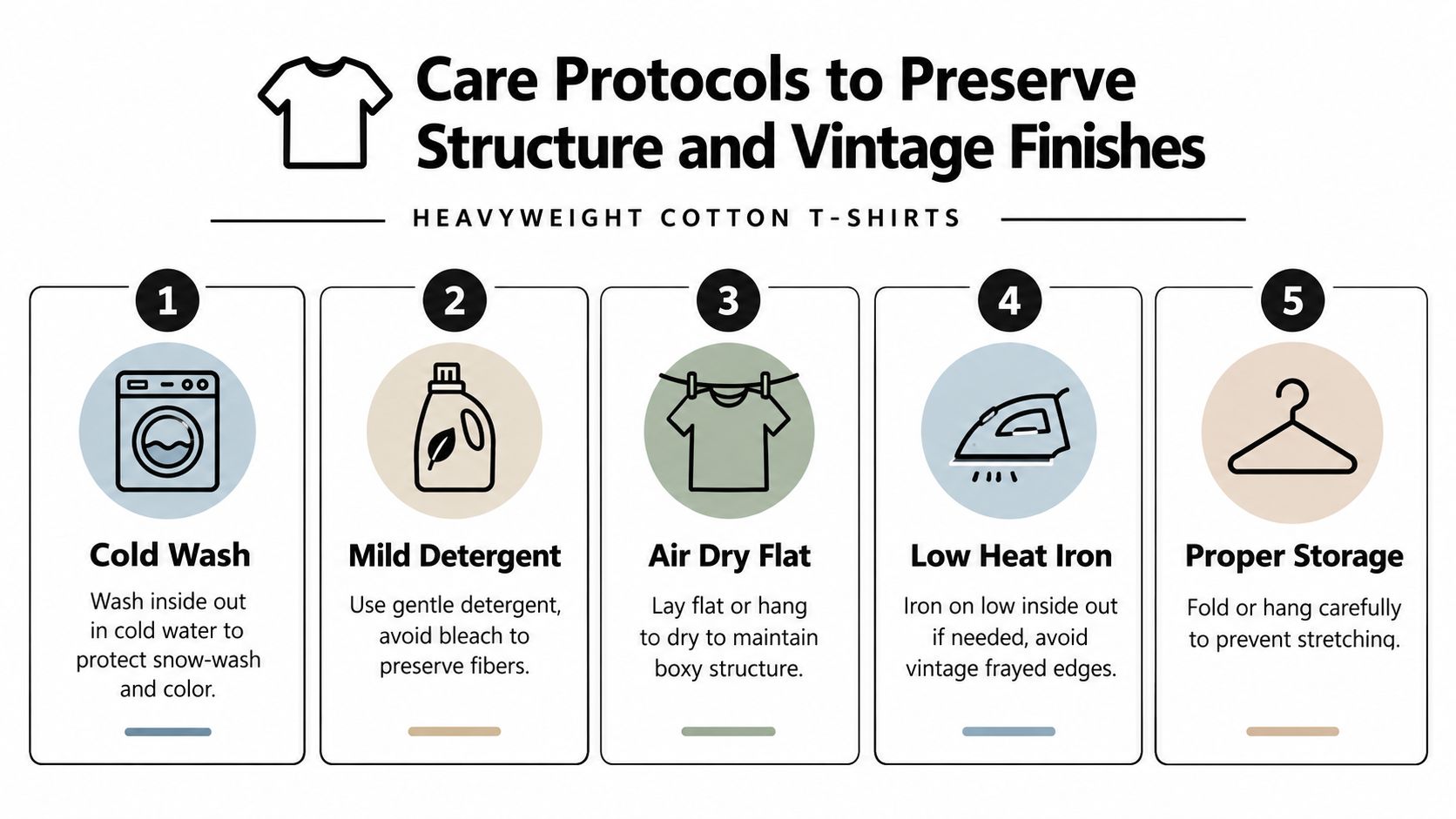
A simple washing routine
- Turn the shirt inside out: This reduces direct abrasion against the outer surface and helps protect washed color and printed areas.
- Use cool water and a gentle cycle: Lower temperatures are a sensible way to limit avoidable shrinkage and rough mechanical stress.
- Choose mild detergent: Avoid bleach unless the care label specifically allows it. Strong chemicals can affect color, fibers, and decorative treatments.
- Control the drying stage: Air drying is gentler for maintaining dimensions. If the label permits a dryer, use low heat rather than a hot cycle.
- Iron with restraint: Use low heat, turn the shirt inside out, and keep the iron away from prints, frayed edges, and vulnerable surface details.
The catalog instructions for one heavyweight washed cotton tee specify machine washing at 30°C on a gentle cycle, no bleach, low tumble drying, low-temperature ironing, and no dry cleaning. That is a useful model for dense cotton with a vintage finish, although the garment's own label should always take priority.
Store the shirt without stretching it
Fold heavyweight tees when the fabric feels especially dense or the neckline has a soft rib. If you hang them, use a broad, supportive hanger and avoid pulling the collar over the hanger hook. A wet cotton tee is heavier than a dry one, so don't hang it while saturated if the shoulder seams are delicate.
For more ideas on preserving worn-in color and surface character, see this guide to vintage wash T-shirts. The central principle is simple: clean gently, dry with limited heat, and handle the garment by its body rather than tugging at the collar or decorative edges.
Styling Heavyweight Cotton for Modern Streetwear and Layering
Heavyweight cotton works best when you treat its structure as part of the outfit. A thin tee disappears beneath an overshirt. A dense tee creates a visible base layer, defines the torso, and gives simple clothing enough texture to look intentional.
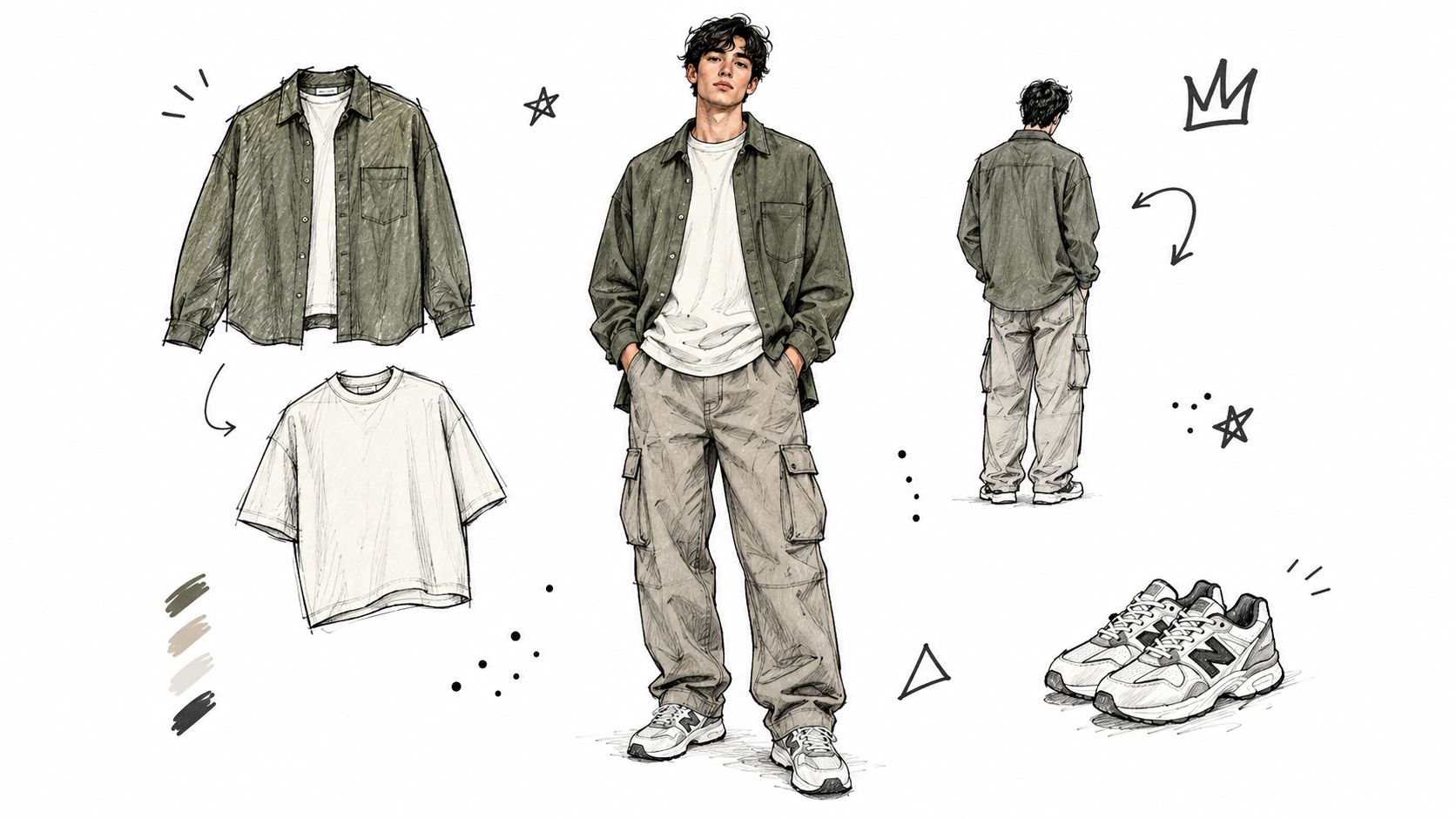
A boxy cut with a drop shoulder pairs naturally with straight-leg denim, relaxed trousers, or cargo pants. Keep the lower half balanced with similar visual volume. If the shirt is wide and cropped, a narrow trouser can create a sharp contrast. If the shirt is long and loose, a straight or relaxed leg usually keeps the proportions calmer.
Use opacity and drape deliberately
A dense white tee can function as the visible foundation beneath an open overshirt without looking flimsy. A darker heavyweight tee can anchor lighter trousers, while a vintage wash introduces variation without requiring a large logo.
Try these combinations:
- Clean everyday outfit: Pair a structured neutral tee with straight denim and simple sneakers. Let the collar and shoulder line carry the look.
- Layered streetwear: Wear the tee beneath an open overshirt or lightweight jacket. Leave enough room across the chest so the dense jersey doesn't pull when you move.
- Long-over-short layering: Place a long-sleeve shirt underneath a short-sleeve heavyweight tee. Match the underlayer's sleeve length to the overall silhouette rather than choosing a fabric that adds unnecessary bulk.
- Vintage direction: Combine a washed or frayed tee with faded denim and understated footwear. Keep the remaining pieces simple so the surface treatment remains the focal point.
- Minimal monochrome: Use tonal shades and let the difference in texture create depth. Dense cotton gives a quiet outfit more dimension than a thin, clingy jersey.
A very heavy shirt can become uncomfortable under a fitted jacket. In that situation, choose a lower heavyweight band or use the dense tee as the outer layer over a slimmer long-sleeve base. The right answer depends on climate, movement, and whether you want fluidity or a visibly architectural shape.
Styling principle: Build the outfit around the tee's silhouette. Don't size up automatically for streetwear. Start with the intended shoulder and chest measurements, then choose surrounding garments that support the volume already present.
This visual guide can help you assess how an overshirt, white tee, and cargo trousers distribute volume:
Vintage washes and frayed edges also change the styling message. They make the shirt look lived-in from the start, so polished trousers or a clean overshirt can create useful contrast. If every item has a distressed finish, the outfit may lose definition.
Building a Wardrobe with Intentional and Mindful Basics
A useful wardrobe assigns each T-shirt a job. In a hot climate, choose enough density to stay opaque without turning the shirt into a rigid, heat-trapping layer. For close-fitting jackets or frequent layering, a lighter option usually sits more comfortably. For a standalone streetwear outfit, denser cotton can hold a straighter silhouette. Use the GSM benchmarks discussed earlier as a starting point, then judge the cut, construction, and fabric hand together.
Start with the role you need the garment to perform. An oversized shape depends on finished chest, shoulder, sleeve, and body measurements, not the GSM figure alone. If you wash clothes frequently, check the shrinkage information and follow the care label closely. Dense cotton can behave like a tightly packed wooden frame: it holds its shape well, but heat and careless drying may alter the fit.
A buyer's final checklist
- Purpose: Decide whether the shirt is for warm-weather wear, layering, workwear, or a structured streetwear outfit.
- Weight: Use GSM or ounces per square yard rather than trusting “premium” or “heavyweight” alone.
- Fit: Compare garment measurements with a favorite tee, especially chest, shoulder, sleeve, and body length.
- Shrinkage: Look for pre-shrunk or compacted construction, and treat unknown shrinkage conservatively.
- Construction: Inspect the collar, shoulder seams, side seams, hem, and any graphic application.
- Finish: Decide whether a clean surface, snow wash, vintage wash, or frayed detail suits your wardrobe.
- Care: Confirm that you can follow the washing and drying instructions consistently.
Mindful purchasing means buying fewer garments with clear, repeatable uses. A well-chosen cotton tee can support jeans, cargos, overshirts, jackets, and sweatpants without relying on a seasonal logo or complicated styling. Faith-informed or purpose-driven labels may add meaning for shoppers who want clothing to reflect a considered aesthetic. Materials, measurements, and care requirements still deserve equal attention.
For readers interested in a compact, unisex-focused assortment, 99 Collection's clothing range presents casual staples such as cotton T-shirts, tanks, and sweatpants with vintage-inspired treatments and minimalist styling. Evaluate each garment by its specifications and intended fit, as you would with any other label.
The strongest choice is the shirt you will wear often, wash responsibly, and keep because it still suits your daily life. Thick cotton T-shirts for men become useful wardrobe pieces when fabric weight, silhouette, shrinkage, and care work together.
99 Collection offers contemporary unisex basics, including cotton T-shirts with heavyweight or vintage-washed treatments, alongside tanks and sweatpants for simple casual wardrobes. Visit 99 Collection to compare available silhouettes, fabric details, and finishes, then choose the piece that matches your preferred weight and fit.