

An oversized T-shirt is a separately drafted silhouette built around dropped shoulders, extra body width, and a relaxed drape. It's not just a regular tee in a bigger size, it's cut to sit away from the body on purpose.
You've probably had the same shopping problem already. One brand's “oversized” tee lands like a normal medium, another brand's XXL swallows you whole, and the tag doesn't tell you which is which. The fix is learning to read the garment the way a pattern maker does, not trusting the size label alone.
Table of Contents
- Why the Oversized T-Shirt Confuses So Many Shoppers
- The Real Definition of an Oversized T-Shirt
- Key Measurements That Make a Tee Oversized
- Oversized vs Relaxed vs Boxy vs Regular Fits
- A Real Oversized Tee Read With Its Size Chart
- How to Choose the Right Oversized Fit for You
- Common Misconceptions About Oversized Tees
- Key Takeaways and What to Explore Next
Why the Oversized T-Shirt Confuses So Many Shoppers
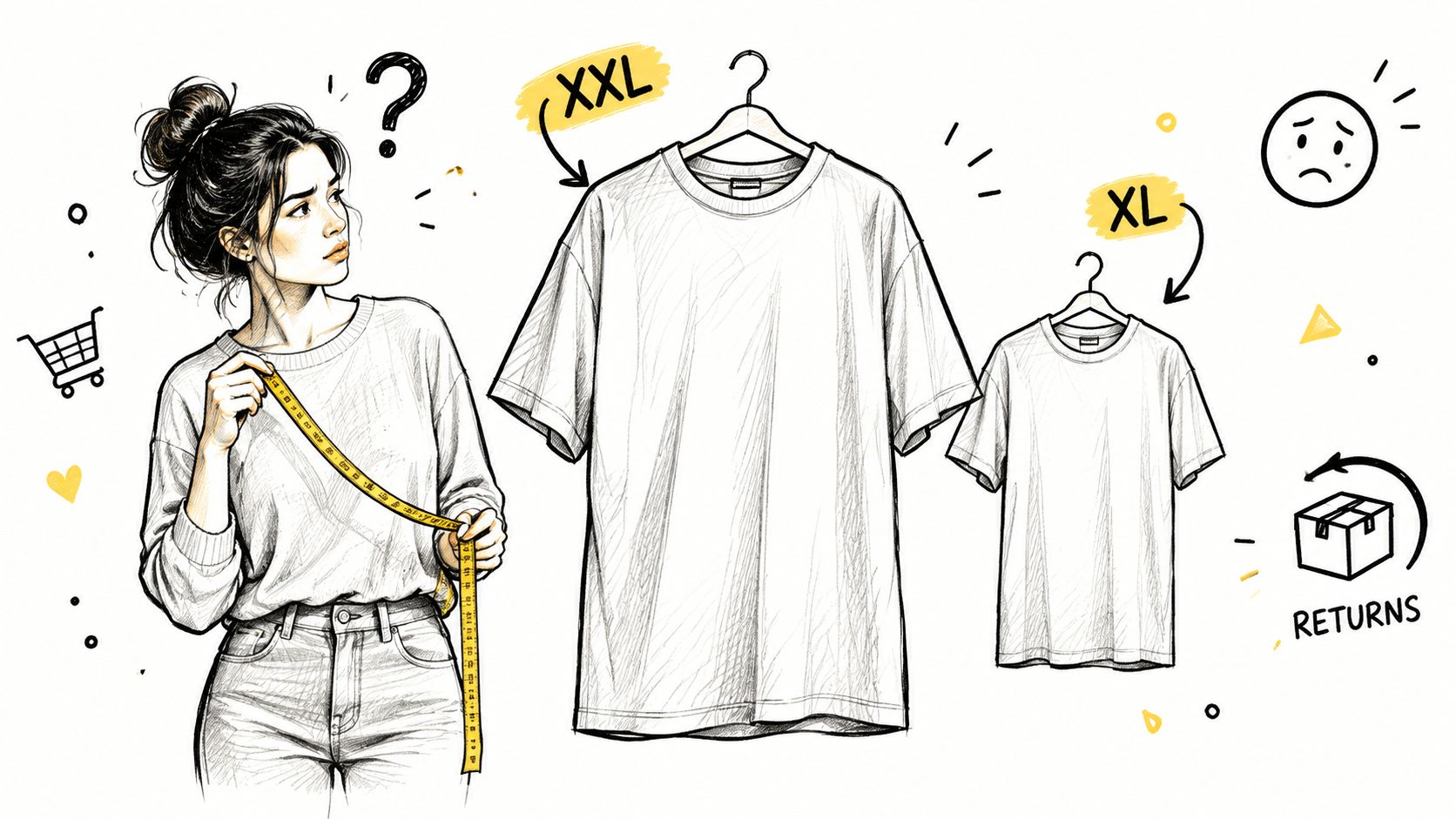
A common online order goes like this. You buy an XL oversized tee, open the package, and it fits like a regular medium. You send it back, order a XXL, and now the shirt hangs so far off your frame that it looks borrowed.
The confusion starts because sellers use the word oversized in different ways. Some mean a true roomy cut, others just mean “loose enough,” and many photos are styled to look relaxed even when the actual garment is only slightly roomy. That's why the picture often tells a softer story than the size chart.
Practical rule: if the listing doesn't show shoulder width, chest width, and body length clearly, you're guessing.
A second problem is that size labels don't translate neatly across brands. A medium in one line can fit like a large in another, so “size up twice” is a weak shortcut. The shirt may get wider, but it can also get longer in a way that feels accidental instead of designed.
The better approach is to treat oversized as a construction choice, not a label. Once you know what to look for, the shirt stops being mysterious. You'll start checking shoulder drop, chest ease, hem length, and fabric weight instead of hoping the tag means the same thing everywhere.
The Real Definition of an Oversized T-Shirt
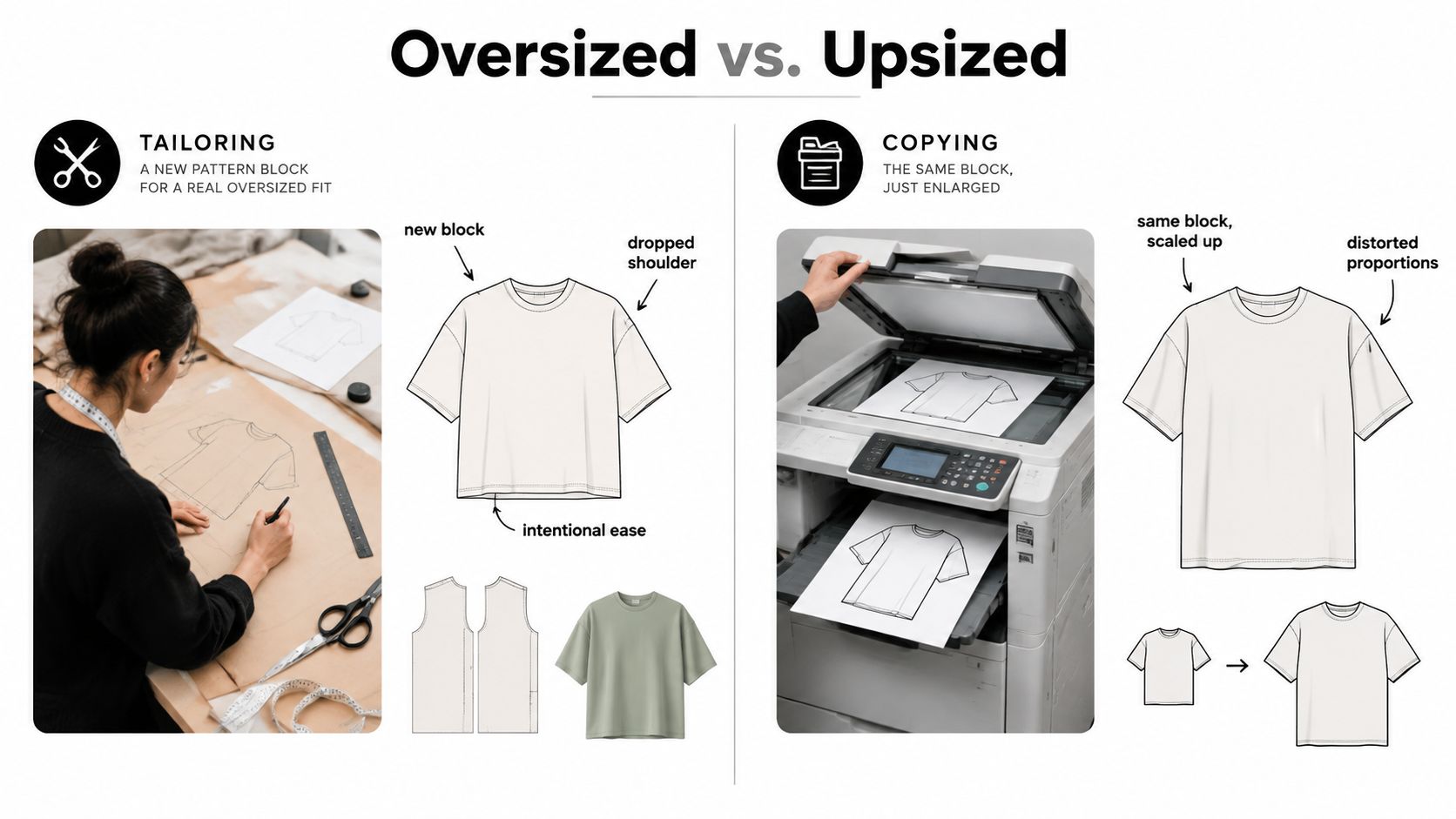
A true oversized tee starts with a new pattern block. That means the designer doesn't just enlarge a regular fitted shirt on a copier, they redraw the shape so the volume lands in the right places. The result is room in the body, not random extra length everywhere.
A tailor versus a photocopier. A copier makes every line bigger at once, which can stretch the neck, pull the sleeves longer, and distort the armhole. A tailor changes the proportions on purpose, so the shirt still looks balanced when it's worn.
Designer rule: oversized should look deliberate, not inflated.
The main construction moves are simple. The shoulder seam shifts outward past the natural shoulder line, the chest gets more ease, the body is cut longer so the hem falls lower on the frame, and the sleeve opens up so the arm doesn't feel trapped. That's why a real oversized tee drapes instead of clings.
A lot of “just size up” advice misses that point. If a brand scales a fitted tee without redrafting it, the neck can look too wide, the sleeves can feel awkward, and the silhouette can lose shape in the wrong spots. Oversized is meant to keep the structure while adding room.
A good example is the Snow Washed Oversized Cotton T-Shirt, which is listed with drop shoulder, loose styling, and a unisex cut. Those details already tell you the shirt was made to read oversized from the start, not just worn one size up.
Key Measurements That Make a Tee Oversized
The quickest way to spot a true oversized tee is to check four anchor points, not the size label. Each one changes how the shirt sits on the body, and each one tells you whether the cut was designed with intention.
Start with the shoulder and chest
The shoulder drop is the easiest visual cue. In an oversized cut, the seam usually sits about 3–6 cm beyond the natural shoulder line, which immediately softens the upper body. The chest then needs enough room to match that wider top line, usually 6–10 cm wider than a regular tee at the same nominal size.
Then look at body length and sleeve shape
Body length matters because oversized shouldn't look like a box balanced on top of the hips. A longer hem helps the tee fall cleanly over trousers or shorts, while a wider sleeve opening keeps the arm line relaxed instead of tight. The sleeve can also read slouchier when it extends farther down the arm, which adds to the laid-back shape.
| Oversized Tee Anchor Measurements vs Regular Fit | Regular Fit Medium | Oversized Fit Medium | Fit Effect |
|---|---|---|---|
| Shoulder position | Sits on the natural shoulder | Drops past the shoulder line | Makes the top half look relaxed |
| Chest width | Closer to the body | Wider through the chest | Adds ease and airflow |
| Body length | Ends around the hip | Falls lower on the torso | Helps the tee drape instead of bunch |
| Sleeve opening | Narrower and neater | Fuller and looser | Gives the arm a slouchy line |
Read the shirt from the top down. If the shoulder is right but the chest is huge, the shape will feel off.
The most useful habit is to compare all four points together. A tee can be wide but still not feel oversized if the shoulder stays in place, and it can be long without reading intentional if the chest isn't balanced. Oversized works when the proportions stay connected.
Oversized vs Relaxed vs Boxy vs Regular Fits
These words get mixed up a lot, but they don't mean the same thing. Once you separate them, shopping gets much easier.
| Fit Type | Shoulder Drop | Chest Ease vs body | Hem Length | Sleeve Opening | Vibe |
|---|---|---|---|---|---|
| Regular | On the natural shoulder | Moderate | Ends near the hip | Neat | Clean and close to the body |
| Relaxed | Mostly on the natural shoulder | More room | Near the hip | Slightly open | Easy, tidy, everyday |
| Boxy | Structured, squared off | Wide and straight | Often shorter | Open | Cropped and urban |
| Oversized | Past the natural shoulder | Substantial | Below the hip | Fuller | Loose, intentional, draped |
A regular fit is the baseline that is widely known. It follows the body with enough room to move, but it doesn't push the silhouette outward.
A relaxed fit adds comfort without changing the architecture much. The shoulder line usually stays close to normal, so the shirt still reads neat.
A boxy fit is different again. It spreads out the torso and often shortens the length, which gives a sharper, more squared outline.
An oversized fit does the most work at the shoulder and chest. It's the one that changes how the upper body reads at a glance, because the seam drops and the volume becomes part of the design.
For a brand-level example of fit language in context, see the unisex cotton T-shirt overview. It helps show how labels like unisex, loose, and oversized can overlap without meaning the same thing.
A Real Oversized Tee Read With Its Size Chart
The easiest way to test a listing is to read the chart like a garment tech, not like a casual shopper. The Snow Washed Oversized Cotton T-Shirt gives a useful example because the numbers already reveal a roomy draft.
Its listed fabric weight is 7.4 oz/yd², or 250 g/m², which places it in a heavier cotton range that helps the shirt hold shape. That matters because heavier fabric tends to hang straighter, so the dropped shoulder and extra body width don't collapse as easily.
The chart itself confirms the oversized intent. In Medium, the shirt lists a shoulder width of 58 cm, a length of 72 cm, a chest of 118 cm, and a sleeve length of 21.5 cm. By the time you reach Large, the shoulder is 60 cm, the length is 74 cm, and the chest is 124 cm, which shows a broad, consistent draft rather than a basic tee scaled up at random.
| Size | Shoulder | Length | Chest | Sleeve length |
|---|---|---|---|---|
| S | 53 cm | 70 cm | 112 cm | 20.8 cm |
| M | 58 cm | 72 cm | 118 cm | 21.5 cm |
| L | 60 cm | 74 cm | 124 cm | 22.2 cm |
| XL | 59 cm | 76 cm | 62 cm | 22.9 cm |
| 2XL | 61 cm | 78 cm | 64 cm | 23.6 cm |
| 3XL | 63 cm | 79 cm | 67 cm | 23.6 cm |
The finish also matters. A snow-washed surface softens the visual edge of the cotton, while the listed drop shoulder and round neck / O-neck keep the neckline and upper body looking calm rather than stretched out. The shirt's slight stretch also gives a little give without turning the silhouette clingy.
If the chart shows shoulder, chest, and length moving together, the tee was probably drafted as oversized from the start.
That's the same reading method you can use anywhere else. Check the shoulder first, then chest, then length, then sleeve. If those numbers move in balance, you can predict the drape before you order.
For a related product perspective, the brand's oversized tees for plus size guide is useful because it keeps the conversation on proportions rather than assumptions.
How to Choose the Right Oversized Fit for You
The right oversized tee doesn't just depend on the cut, it depends on how you plan to wear it. A shirt can look clean on one person and swallowed on another if the proportions don't match the body or outfit.
Match the cut to your frame
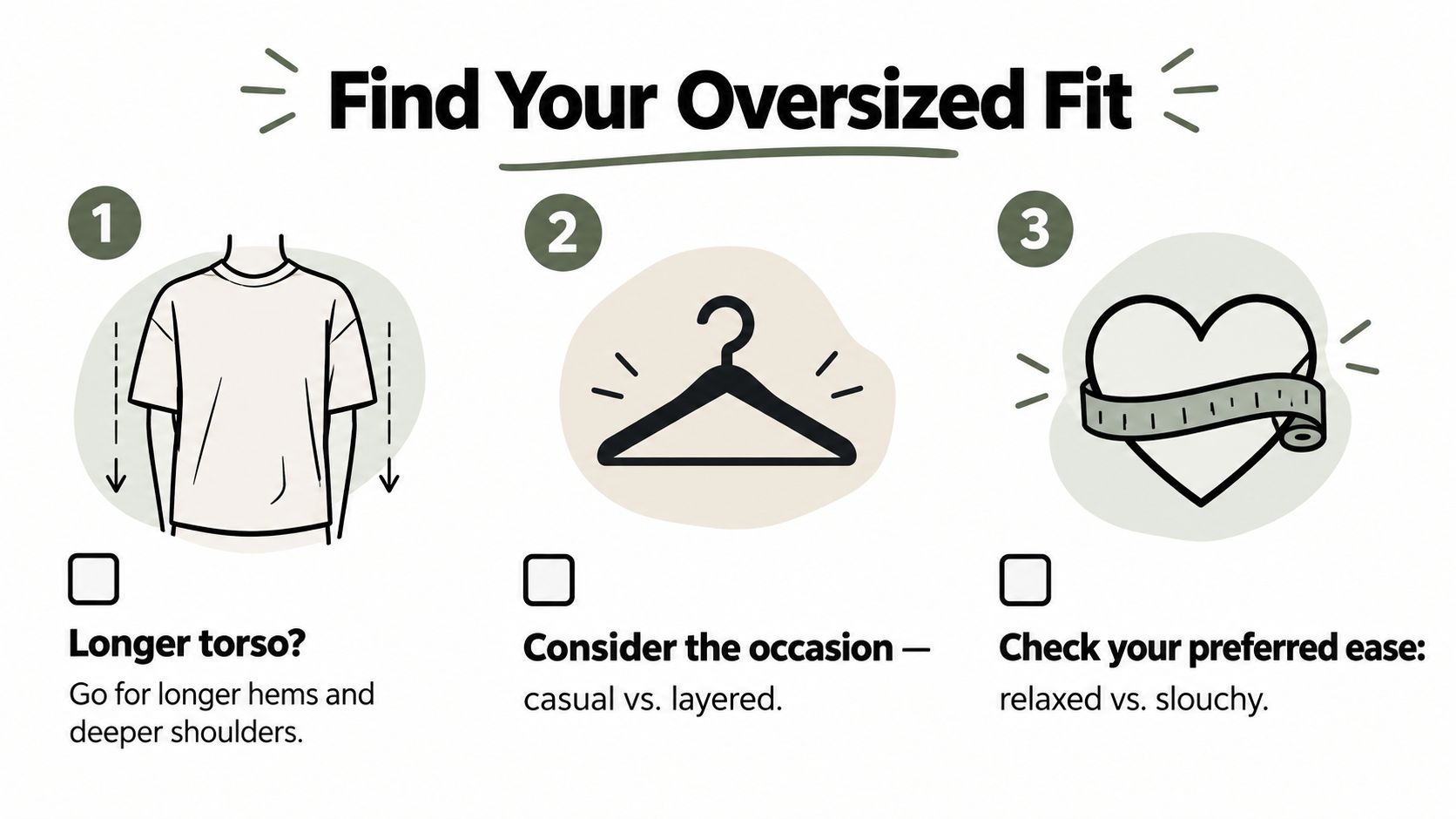
Taller frames usually carry longer hems and deeper shoulder drops without losing balance. Shorter frames often look better when the tee still feels roomy, but the body length stays more controlled so the shirt doesn't take over the whole outfit.
Match the fabric to the look you want
Lighter knits sit differently from heavier ones. A lighter shirt feels airier and drapes more softly, while a heavier cotton body feels more structured and holds the oversized shape with more definition.
Match the styling to the setting
A tucked tee reads differently from one left loose. Tucked into trousers, an oversized shirt can look clean and deliberate. Left untucked with relaxed bottoms, it reads more casual and easygoing.
Simple rule: if the tee is wide, keep the bottoms cleaner so the outfit doesn't lose shape.
That's why straight-leg denim, relaxed chinos, or well-fitted trousers often work better than another oversized piece on the lower half. You want one part of the outfit to carry the volume and the other to steady it.
For outfit ideas built around that balance, the brand's how to wear an oversized T-shirt guide fits naturally with this approach.
Common Misconceptions About Oversized Tees
The biggest myth is that oversized automatically means sloppy. That only happens when the proportions are off, usually because the shirt was sized up instead of drafted well. A proper oversized tee still has control at the shoulder, chest, and hem.
A second myth is that you should always buy several sizes larger. That shortcut often creates a stretched neckline, awkward seams, and sleeves that get long in the wrong way. The better rule is to buy the intended oversized cut, not a regular tee pretending to be one.
A third myth is that oversized belongs only to streetwear. That idea is outdated. A clean cotton oversized tee can sit under a blazer, work with trousers, or pair with a midi skirt without looking careless.
Oversized isn't the opposite of polished. It just needs better proportions.
The fabric choice matters here too. A refined cotton tee, or a tee with enough structure to keep its line, usually looks more intentional than a flimsy one that collapses at the first fold. That's why the same silhouette can feel laid-back in one fabric and sharp in another.
The useful shopping rule is simple. If the shirt looks roomy but still hangs with shape, it's probably doing the job. If it looks stretched, twisted, or overextended, the cut is wrong for the style you want.
Key Takeaways and What to Explore Next
An oversized T-shirt is a designed silhouette, not a bigger tag. Signs are a dropped shoulder, extra chest ease, a longer body, and sleeves that look full without becoming sloppy.
The fabric changes the result just as much as the pattern. A heavier cotton tends to hold the shape, while a softer or lighter knit gives more drape and less structure. That's why reading GSM, shoulder drop, and chest width together tells you more than the size label ever will.
If you're shopping with confidence, keep three questions in mind. Does the shoulder drop where it should, does the chest give enough room without drowning the frame, and does the hem land where you want it to sit? If the answer is yes, you're probably looking at a true oversized cut.
A smart next step is to compare outfit formulas, fabric weights, and care methods for roomy knits, because those choices affect how the shirt looks after the first wash and after the fifteenth. Construction always beats guesswork, and the chart usually tells the truth before the tag does.
If you want oversized basics that are easy to read by fit, fabric, and finish, 99 Collection keeps that idea front and center in its unisex staples. Browse 99 Collection to compare tees, washes, and cuts with the same proportions-focused eye you'd use after reading a size chart.